The RTS genre has gone through many changes and evolutions to stay relevant, and the age of lighting fast micromanagement real-time strategy is mostly over. Developers have been trying to find that sweet spot between the fast-paced gameplay of real-time with the strategic depth of a Grand Strategy or 4X game.
AI War 2 is one such hybrid and a bloody fantastic one at that. This is a re-review of the game as much has been added, improved, and changed since we reviewed it in 2019.
Arcen Games have done a splendid job of making the sequel more accessible for newcomers, with a decent tutorial and a plethora of starting difficulties and options for new players to sink their teeth into slowly. The UI has been vastly improved since release to facilitate navigation through it and the game has integrated into its user interface a quick link to the community Discord and wiki for any help someone might need. You can feel that this time they wanted new players to feel welcomed instead of overwhelmed.
Tread Carefully and Carry a Big Fleet
Let’s freshen up on AI War 2, shall we? AI War 2 follows a unique asymmetric formula not commonly seen in the RTS genre, where the AI already controls all the systems, and you must wrestle it back through guerrilla warfare. AI War 2 executes this idea well with its gameplay and mechanics, such as AIP, which I’ll explain soon.
The story of AI War 2 begins with an AI that has already beaten humanity and taken over every planet in the system – except for one, your homeworld. As the player you are insignificant to the AI, as it turns its eyes towards a greater threat in another galaxy leaving behind a small leftover force. Your goal is to capture planets, grow a strong enough fleet and destroy the AI core. Sounds easy right? Well not so, you would be surprised…
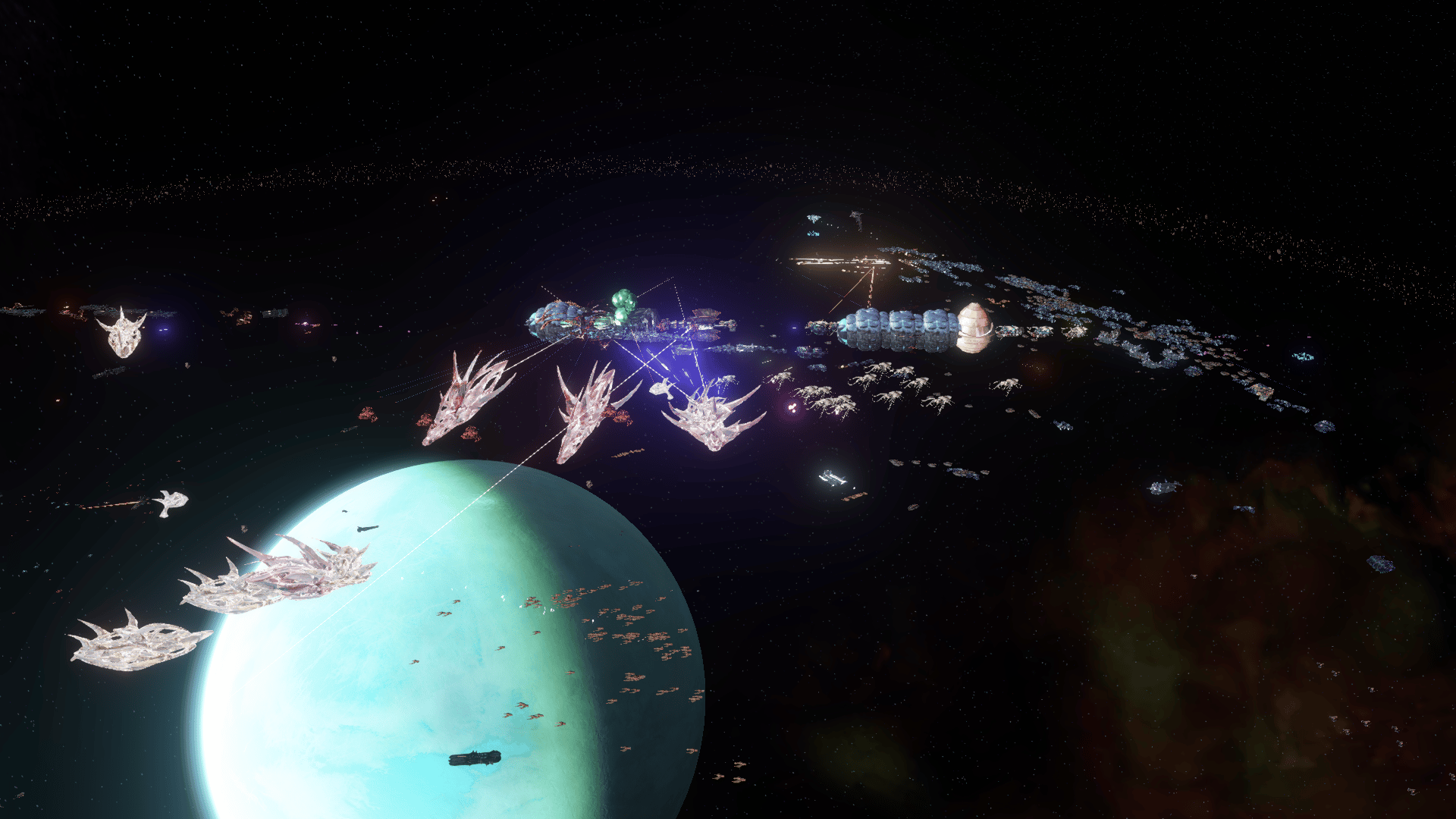
One of the important mechanics is called AIP or AI Progression. Each time you capture a planet, destroy an important structure or recruit help, AIP increases and the AI starts paying more attention to you – and with more attention comes more problems. Once you pass a certain threshold, the AI unlocks new abilities, like counterattack waves or reconquest waves, all that make your life tougher, and that is beside the AI upgrading its ships. Periodically the AI will send big waves to one of your planets, usually the weakest one. This generally does not happen right away, and a timer appears counting down to the AI launching their attack where you can prepare for it, like building turrets or relocating your flagships to the area. You can prevent the invasion by going to the planet where the wave will come from and destroy the wormhole. However, this will give you an AIP penalty.
Decisions A-Plenty
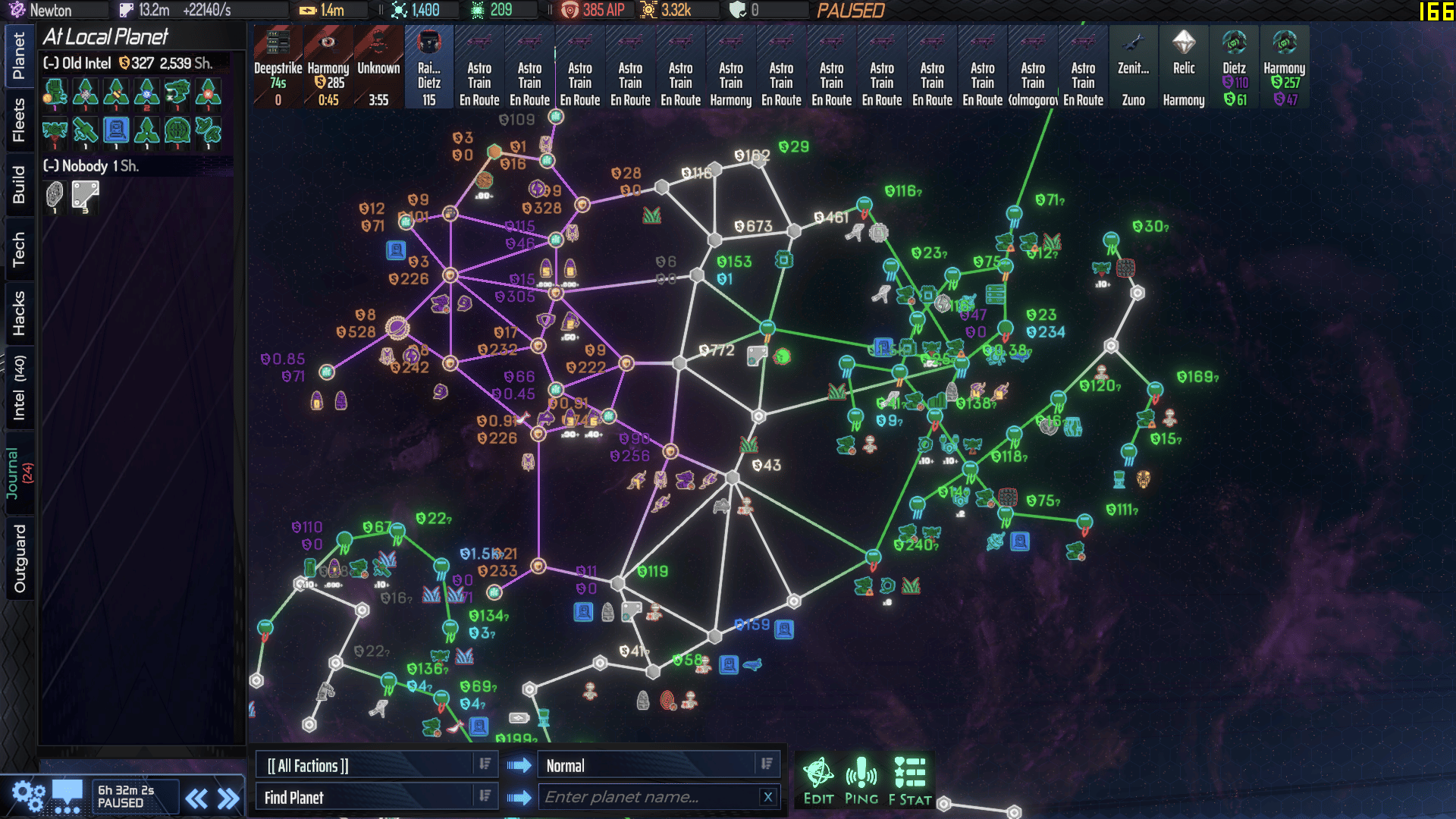
AI War 2 is a game of risk and reward: You will need to plan ahead which systems will benefit you more, unlike other 4X games or RTS’, attempting to paint the map will cause AIP to rocket up so much that the AI will realize you are a big threat and must be taken down at all costs, bringing its mightiest ships to rain hellfire on you which is very likely game over. There are four resources in AI War 2; Metal, Energy, Science and Hacking points, all given to you every time you capture a planet.
Metal is simple and is needed to build almost everything, including ships, buildings, and turrets. You will need to manage it carefully because if you overuse more than you produce you can be caught in an exhausted zone, where production of everything is drastically slowed down.
Energy is what keeps your force fields up and running which is of paramount importance because it might give you the seconds you need to prevent one of your command stations, or most importantly, your home command station from being destroyed. Each ship, turret, and structures also cost energy – some more than others, and you will need to manage it wisely to avoid a brownout. Some planets have mysterious relics from another alien race that give a big boost of energy, but if they are destroyed, the AIP will increase.
Science is what you need to upgrade your ships and buildings. Each upgrade is more expensive than the last, so you will need to capture or hack more planets to get higher tech unlocks. Science is a limited resource however that is not generated by buildings like energy or metals, therefore it is important to only upgrade the techs that fit your build.
Hacking points are another valuable resource. It allows your flagships to infiltrate into the AI systems to unlock more ships, reduce AIP, tame space bugs, and more. The AI however does not like being hacked; the more you hack, the stronger the AI response will be sending stronger and stronger fleets to stop your hack.
Some planets offer better metal resources, which you need to maintain your economy to build your defense turrets or ships, but the best ones could be isolated, far away from your cluster and harder to defend. There are also powerful mega ships called Golems, but they are costly to build and come with an AIP price. The key to success is about balance, taking only what you need. When capturing a planet, you’re given the option to build one of three types of command stations; Economic, Logistical or Military.
Military provides nearly no economic boost, only a tiny bit of extra metal generation and energy but can build a huge amount of turrets, making them great for checkpoints and dealing heavy damage to AI waves without requiring your presence on the planet.
Logistical stations are in between, giving a modest economic boost and able to build a respectable amount of turrets, but where they shine is being able to build more force fields than the other two, making it good at slowing down the AI from making fast progress and buying you time.
Managing your four resources and choosing which command station is best suited for which planet is vital for victory, but Arcen have done a good job at streamlining it, as well as providing enough information to the player to understand where everything is going, how much each planet is producing or spending, and how strong the defenses are. I found this aspect of the game enjoyable due to how much control you can have over your economy, each decision is impactful and rewarding, and this is why the game has such a herculean grip on me.
The Spire Wants to Play
The first expansion of AI War 2, The Spire Rises, alters the game and provides players with new ships, lots of new buildings and an alternative victory condition. In the base game, you are fighting a guerrilla war, only taking what you need and retreating when things get too hot. The Spire changes everything and allows the player to take the fight to the AI in a more standard RTS fashion.
Enabled through the settings or unlocked by hacking a beacon in a campaign, the objective of the Spire campaign is to locate on planets, a Spire Relic. Once found and hacked you can move them to one of your own command stations where it will become a glorious bastion, and provide you with a powerful frigate, but getting the relic to your city is a challenge in itself, the ai terrified by the spire will send powerful waves to destroy the relic and they will send their most vicious fleets fighting the unknown enemy in another galaxy to do it, as you get access to powerful new toys so will the AI.
As you save more relics and build more Spire cities, your Spire frigates will upgrade and evolve into devastating dreadnoughts, but the AI can also acquire the relic and build powerful ships for themselves. Many are transported on cargo trains, giving players new opportunities to acquire the relics if they react fast enough.
I really enjoyed how the Spire campaign shakes up the formula and gives the player more strategic decisions. If you are having trouble in a normal match, you could decide to hack the Spire beacon halfway in your campaign and get an added boost to your power and economy, at the cost of the AI also getting some more toys. This is the sort of thing AI War 2 excels in, providing you with plenty of choices to make but also have you ponder if it is the right choice, as every action has a reaction from the ai.

Acquired Taste
One thing you will notice when playing the game for the first time is that it will not blow you away in the visual department, however I cannot really fault them for that. Besides a limited budget, this was probably the best for the game since it has a lot of simulations happening in the background and thousands of ships each doing something that needs to be calculated. Arcen wanted to make even the weakest computers able to play it, however I cannot help but wish it just had a little more “oomph”.
The soundtrack as well is a bit of an acquired taste. It is not bad per se, and I think it is really diverse and unique just like the game, but I won’t deny it took me some time to eventually warm up to it and then love it. Sad piano music playing in the background while you’re having an enormous battle is not something you see or hear often.
Conclusion
I never played the first AI War as it looked daunting and over-complex, but I was always curious about it having only heard good things about it. When Arcen released AI War 2 and I saw how much easier it was to digest, I had to dig in, and I’m glad I did. It has the best AI I’ve ever seen in a Grand Strategy/RTS game coupled with a great amount of content, replayability, exceptional expansions (with more coming), full-on mod support, and most of all, a fresh executed idea. All of this makes AI War 2 a game I will keep on playing for a very long time.
Arcen Games should be proud of the AI War series, as I certainly would be.


LightJolly enjoys variety in his gaming, but has a real passion for strategy games.
A self-described thinker.