“Any sufficiently advanced technology is indistinguishable from magic”.
– Arthur C. Clarke
“Never seen a recruit melt a bug’s face from 500 yards away with magic.”
– Some tough future Sargeant, probably.
Let’s face it: the strategy game market, especially 4X, has and has always had, space fever. Though we are arguably living in a new Renaissance of strategy releases, it seems like every month there’s an announcement of a new game set somewhere in the immense gap between the clouds and the outer edges of the universe. “We need a new setting!”, many cry, gnashing their teeth and rending their clothing. “It’s stale! There’s no drow! Where are my terrain bonuses?”.
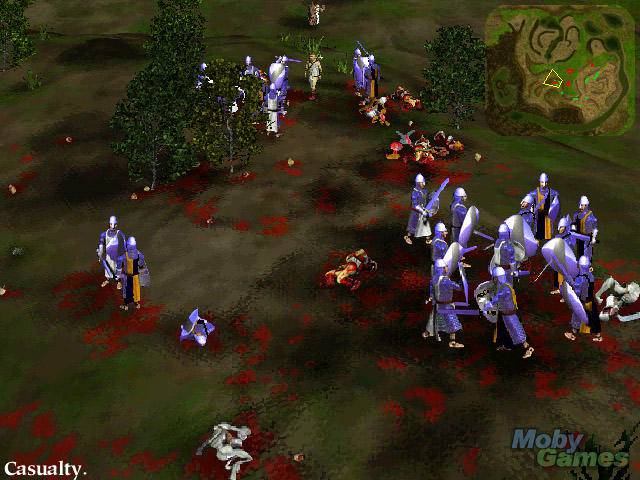
I assume having the first picture in your article on space strategy be from Myth: The Fallen Lords is fine.
Well, gather around the fire, younglings, and hear tell of why the proliferation of space strategy is not only a good thing for 4X, but for the development of the genre as a whole.
An initial benefit to space strategy is how it can both focus and logically abstract the often daunting concepts most 4X games revolve around. Much as storytelling tropes need to be kicking about for a while in order to be fleshed out, often games need to get comfortable in a setting before abandoning some easy paths and branching into new creative directions. Standing on the shoulders of giants that have come before is nothing new, but the iterative cycle moves faster in futuristic settings.
The often huge scope of the game area necessitates many changes. Stodgy hex-based movement is translated into point-to-point lightspeed jaunts between solar systems. Entire planets replace cities as industrial powerhouses and military bases, while starships enter the roles of traditional military rock, paper, scissors, with economic upkeep being the limiting factor, rather than X units per tile. Exploration stretches into the far reaches of the Galaxy; simultaneously reducing travel downtime (if I never have to spend extra movement points crossing a river on an overland map again in my damn life, I’ll be happy) and heightening the excitement of potential discoveries from solar node to solar node. Glass rival planets from orbit or simply pull a Death Star rather than going through a protracted siege. Abstracting the above rules and more helps ease players into a state where they can more effectively evaluate what new game designs have been brought to bear.

Sorry, Intergalactic Expressway coming through.
This paring down or reevaluation of concepts efficiently lays the groundwork for another major advantage of the setting: as an incubator for new takes of gameplay mechanics. A shift to technological warfare has massively enabled the rivet counters among us, bringing detailed fleet, unit, and army composition micro into the realm. The genre has long advanced past the stage of equipping units with +1 armor and vorpal blades; why stop at flanking bonuses and enchantments when you can kit out an entire space fleet from scratch, design specific supply bases, and develop the most efficient logistics chains to support your vanguard? Modern unit creation has become more robust than ever, iterating constantly from one game to the next. (Hell, it can often be turned into the meat of the game in its own right. Make one working ship in Aurora 4X. I dare you.)

This will break your head.
As one of many potential illustrations of this mechanical development in design, we can use the (rightly)oft-maligned Civilization: Beyond Earth. Though it played out as a fairly bog-standard imitation of its predecessors, it did manage to experiment with a few set-in-stone mechanical aspects, namely, the tech tree and the traditional paths. The former tree was reconceptualized as a ‘tech web” with semi-interlocking advancement spokes that let you vary your research paths a bit more, and dabble in a few side technologies that the player may usually have ignored in the usual tree’s sprint to technological supremacy. This was a novel approach towards tackling an existing 4X trope and inspired other games to think about how to approach the same issue.
The approach towards the tradition paths was interesting in a different way, as rather than them being a new approach to an old mechanic, they took an existing mechanic and amplified the effects on gameplay. As the player progresses along with the aforementioned tech web and completes certain quests in the world, they increase their affinity in one of the three paths. As affinity advances, certain technologies are locked out, and the diplomatic effects of the path choices amplify, ostensibly more organically tracing the development of your colonist society and affecting diplomatic impact. Again, though the path changes didn’t have quite as interesting an impact on the game dynamics as intended, it was a firm attempt at seeing how much further a gameplay system could be pushed.

Web-slinging.
Numerous more examples exist across strategy, and of course, this systems experimentation is in no way unique to a sci-fi setting, but the ease in which changes in games can be immediately evaluated and contrasted with those their predecessors is a strong testament to our familiarity with the groundwork space strategy has laid.
Finally, space is not only the most fertile territory for those ideas to grow in but also the setting most adapted to our modern sensibility of what storytelling can be. The fact that we both invented flight and went to the moon in the space of only about the last century is a testament to how much closer we are to laser guns and FTL drives than various sizes of pointy iron stabbers. This proximity makes science fiction environs the most accessible playground for extrapolation of current socio-political questions into compelling narratives.
Science fiction is fundamentally optimistic and forward-looking. Even though it may occasionally paint a dystopian future where Toxic Avenger looking mutants roam freely across a blasted wasteland, a hopeful message can often be found in the fact that humanity (or some form of it) has survived, and more stories than not find their rising action in tales depicting noble causes to protect, develop, or even fundamentally evolve civilization.
Take the trope of the cryo sleeping spacefarer, tucked away nicely into a flight centuries-long, being jarred into early wakefulness for one of any number of reasons. A conceit that’s been done not a few times, but there’s a reason: it’s compelling. This chestnut gives us a protagonist that we can identify with as s/he is thrust unwittingly into some form of a brave new world, interpreting whatever far-flung oddities they’re witness to from the perspective of the modern-day. It’s an immediately accessible way for a story to say “Hey, check out this weird stuff I’m throwing at you–how do you and Jo-Jo Protagonist here feel about it? Compare and contrast!”. The observer is invited into the setting instantly and forced to start making analogies between their own way of thinking and how it stacks up with the characters and settings presented.

Age of Wonders: Planetfall takes this exact same trope, and uses it to push the gamer into the world of the game. During the initial campaign scenarios, Jack Gelder starts learning about the fall of the Star Empire he thought he was still serving in, meets a few Mad-Max survivalists, routs a psychic ex-slave alien or two, and away we go. From the jump, the game asks us to consider slavery, imperialism, and the repercussions of the downfall of the same without us even knowing it. These themes resonate because we have a sense of the issues still recurring today in one form or another. One doesn’t have to look far through the strategy backlogs to see examples of political and moral ideology being grappled with in empirical forms, laws, and racial design. Our societies moral stances have also advanced, (though arguably not as much as our technological advances), and with it our ideas of what composes a satisfying narrative arc. In space strategy, focus shifts from stories about one hero’s or tribe’s journey to a larger story about the planetary population or even humanity or species as a whole. Transcendence, evolution, mass adaptation, even genocide. These themes are more prevalent on the grand scale in space fiction and play perfectly into the strategy game arena. The overarching story of Alpha Centauri is an obvious touchstone here, but aspects of the aforementioned affinities in Civ: Beyond Earth and certain ascension paths in Stellaris also fit.

Does “accused of destroying the sentience of unwilling subjects” sound euphemistic to you?
Of course, I realize that the genre I love doesn’t really need my help regarding the setting. It’ll go to space, or back in time, or just “out for some cigarettes” for as long as it damn well pleases. And, hey! That’s fine! I get off on grand battles between green-skinned fellows with clubs and animal-men with slightly different clubs just as much as the next guy. Innovation continues in all aspects of the field, and I still slavishly look forward to each new 4X on the horizon.
Just know that in my heart of hearts, I’ll always be longing for my next opportunity to bring my armadas to battle in a place where no one can hear me scream.
Editor’s Note: Niblick is a new author here at eXplorminate and we are always curious to know how you feel about newcomers! Let us know below!