It’s a Terminal World… A Brief History.
TUI‑based strategy games are the scrappy masterminds of the terminal world. The kind of titles that look you dead in the eye with a blinking cursor and say, “You don’t need graphics when you’ve got tactics.” Long before GPUs were flexing their shader cores, early strategy classics like Empire, Rogue’s more tactical descendants, and various UNIX war‑sims were quietly teaching players the art of resource management, positional play, and long‑term planning using nothing but ASCII symbols and a prayer. A capital “A” might be an archer, a “~” might be a river, and a red “X” might be the reason you’re restarting the campaign. These games weren’t just minimalist. They were brainy, brutal, and weirdly elegant.
As the decades rolled on, TUI strategy didn’t fade; it evolved into a niche power fantasy for players who prefer their conquests crunchy and their UIs aggressively rectangular. Modern terminal strategy titles from colony managers to galactic conquest sims embrace the hacker‑aesthetic with pride, turning your command line into a war room where every keystroke feels like issuing orders from a submarine. There’s a quirky charm in watching empires rise and fall through text alone, as if your computer is conspiring with you to run a shadow government. In a world obsessed with 4K textures, TUI strategy games remain defiantly cerebral, wonderfully odd, and absolutely committed to proving that the sharpest graphics are still the ones in your imagination.

NetHack (1987) The “galaxy‑brain” evolution of Rogue. It’s a turn‑based tactical puzzle box where ASCII symbols represent a world so complex it feels like the terminal itself is plotting against you. Strategy here isn’t optional. It’s survival.
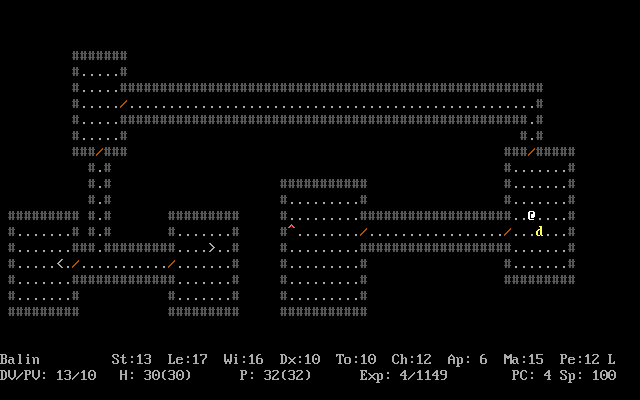
ADOM (1994) A more narrative‑driven, world‑spanning strategy roguelike where your choices ripple across an entire continent. It’s like running a fantasy campaign through a command line.

Dwarf Fortress (Classic ASCII Mode, 2006) The legendary colony‑management sim where every dwarf has a personality, every fortress has a tragic downfall, and every player has a story that starts with “I thought I had enough booze.” A pure TUI masterpiece of emergent strategy.
The ASCII Titans That Redefined Strategy
Dwarf Fortress, ADOM, and NetHack didn’t just use ASCII, they weaponised it. These games proved that text‑based strategy could be deeper, stranger, and more ambitious than many graphical titles of their eras. NetHack (1987) showed the world that ASCII could simulate a wildly complex tactical ecosystem: monsters with unique behaviours, items with hidden interactions, and a ruleset so intricate it felt like the terminal itself had a PhD in chaos theory. Every symbol on the screen carried meaning, and every turn demanded strategic foresight. It set the tone for “systems‑first” design, a philosophy that modern strategy and roguelike games still worship.
ADOM (1994) pushed that philosophy outward, expanding ASCII strategy into a full world simulation. It introduced overworld maps, factions, corruption systems, and long‑term consequences, proving that text‑driven strategy could deliver not just tactics but epic narrative arcs. It bridged the gap between dungeon tactics and grand‑strategy decision‑making, inspiring later games to blend micro‑strategy with macro‑worldbuilding. Then Dwarf Fortress (2006) arrived like a procedural meteor. Its ASCII mode became a symbol of pure simulation ambition: fortress management, emergent storytelling, fluid dynamics, personality modelling, and a world history generator all running in a terminal. It showed that strategy games could be infinitely deep without being visually complex, paving the way for modern colony sims, survival builders, and procedural world generators. In short, these ASCII titans didn’t just pave the way, they bulldozed it, engraved it with runes, and then simulated 500 years of history on top of it.
The Future: The Terminal Strikes Back (A Space Odyssey)
In an age where every AAA game is trying to melt your GPU with ray‑traced reflections of ray‑traced reflections, a tiny rebellion is happening right under everyone’s noses inside the terminal. ASCII‑based TUI strategy games, once the domain of university basements and hobbyist BBS servers, have carved out a stubborn, brilliant niche on Steam. These games don’t care about shaders or particle effects; they care about systems, simulation, and the kind of crunchy decision‑making that makes your brain feel like it’s running a small nation. And somehow, against all odds, they’re thriving. Here are a three modern games carrying that mantle while engaging the FTL and taking us to the stars!
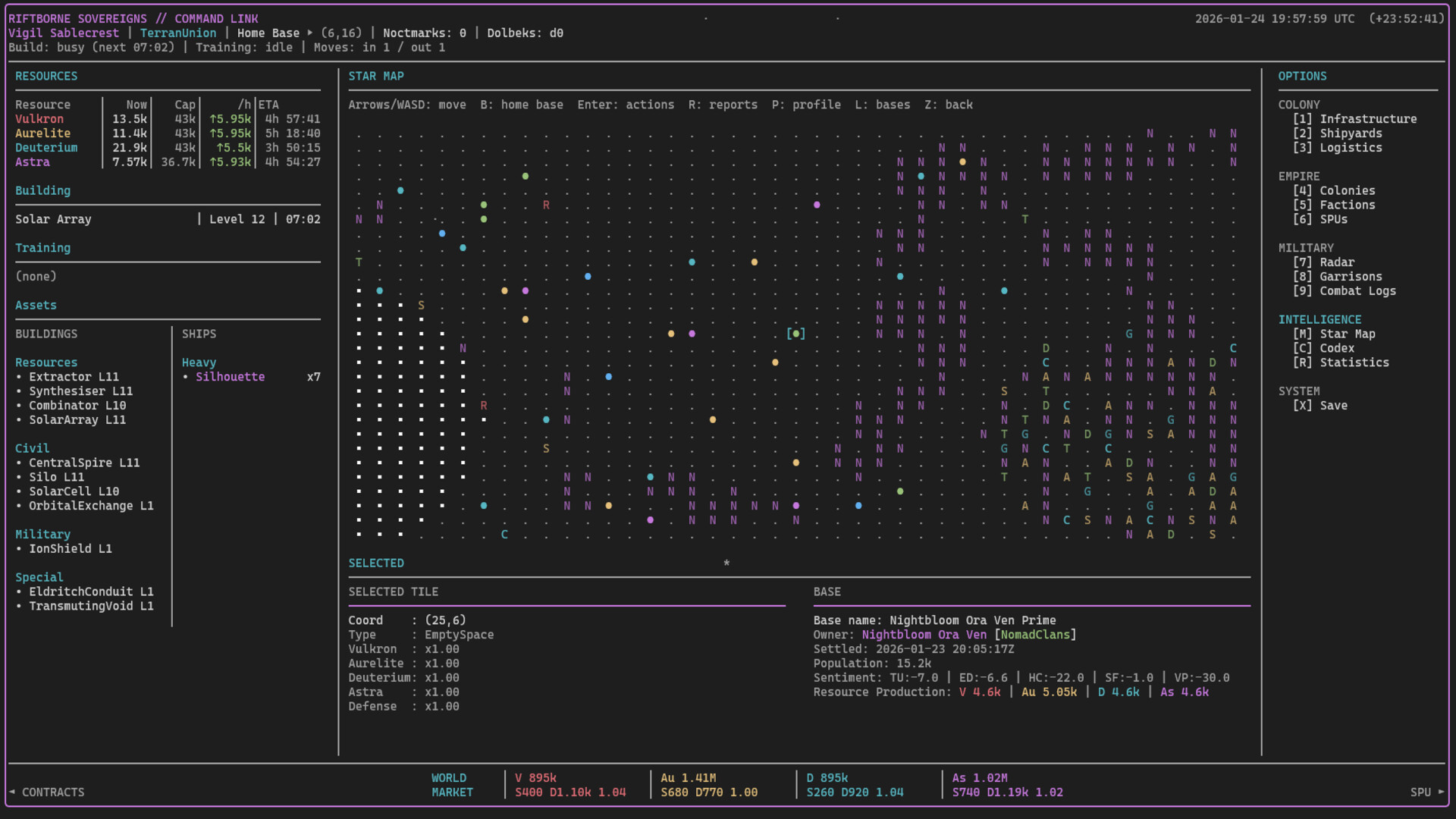
Riftborne: Terminal Based Space 4X
Currently in early access, Riftborne is the kind of game that looks you dead in the eye, slides a blinking terminal prompt across the table, and says: “Go on then. Build an empire. I’ll wait.”
And it will wait. Patiently. For weeks. Maybe months. Because Riftborne isn’t here to give you a dopamine IV drip or shower you with fireworks every time you click a button. It’s here to make you earn your galaxy.

From ‘Hello World’ to Hegemony: The Slow‑Burn Chaos of Riftborne
At its core, Riftborne is a real-time, terminal-based 4X strategy game withe “idler” mechanics. A love letter to players who enjoy dense systems, long arcs, and the quiet satisfaction of watching a tiny foothold grow into a sprawling interstellar machine. You begin with a single, lonely base. A cosmic “hello world” blinking in the void and from that humble seed the galaxy slowly unfurls. Colonies link into supply chains, fleets rise and fall, factions whisper and posture, markets shift under your feet, and enemies quietly study your habits like overachieving students preparing for an exam on you.
Every early decision carries weight, echoing across hours of play. A modest trade route you set up on day one might evolve into the backbone of a thriving galactic economy or implode spectacularly because you forgot to train spies and someone else didn’t. Riftborne delights in these long-tail consequences, turning even your smallest choices into future triumphs or catastrophes. Either way, the game makes sure the lesson sticks.

The 4X That Won’t Rush You. Riftborne’s Galaxy Moves at the Speed of Strategy
In Riftbrone, campaigns don’t wrap up neatly after a few late nights; they stretch across weeks or even months as the galaxy shifts, factions sharpen their ambitions, and rival powers quietly grow fangs. It’s a game you settle into, something you inhabit rather than blitz through, rewarding the kind of player who enjoys watching an empire take shape one deliberate decision at a time.
This slow-burn pacing is entirely intentional. Riftborne thrives on patience, planning, and the long-view satisfaction of seeing a tiny early choice ripple outward into a galaxy-shaping consequence. Maybe you optimized a supply route on day two that becomes the backbone of your entire economy, or maybe you ignored a minor threat that later blossoms into a full-blown crisis. The game is built around these long-tail outcomes, turning your strategic foresight (or lack thereof) into the story of your campaign.
And if you’re the sort of player who craves constant explosions, rapid unlocks, or a campaign that politely ends before Monday, Riftborne will simply blink its cursor at you and continue calculating fuel consumption ratios. Its strengths lie in slow-burn empire building, deep logistics, retro terminal-style interfaces, procedural galaxies with meaningful geography, faction politics, flexible economic systems, and long-run progression that tracks your triumphs and misadventures across the stars.

Riftborne is a strategy game for people who enjoy systems that breathe, galaxies that evolve, and campaigns that feel like personal sagas. It’s quirky, deliberate, and quietly ambitious. An empire builder that doesn’t rush you, but absolutely expects you to rise to the challenge.
If you’ve ever wanted a grand strategy game that feels like running a star empire from a command-line interface, Riftborne might just become your next long-term obsession.
Riftborne is out now on Early Access on Steam!
Warp to Sector One: The Space Trading Sim That Thinks It’s Running on a CRT in 1983
Warp to Sector One shouts them in ALL CAPS, through a curved CRT screen, while a wireframe dreadnought rotates slowly in the corner for no reason other than vibes.
This is a space trading and exploration game that doesn’t just nod to 80’s sci‑fi computer terminals, it raids their closets, steals their fonts, and proudly struts around in their command‑line jumpsuit. And honestly? It looks fantastic doing it.
You begin with the classic setup: A tiny ship. An empty cargo hold. A galaxy that does not care about your feelings. Your fuel is low. Your wallet is sad. And somewhere out there is a trade route that could make you rich enough to buy a moon… assuming pirates don’t vaporize you first.
Welcome to the frontier!
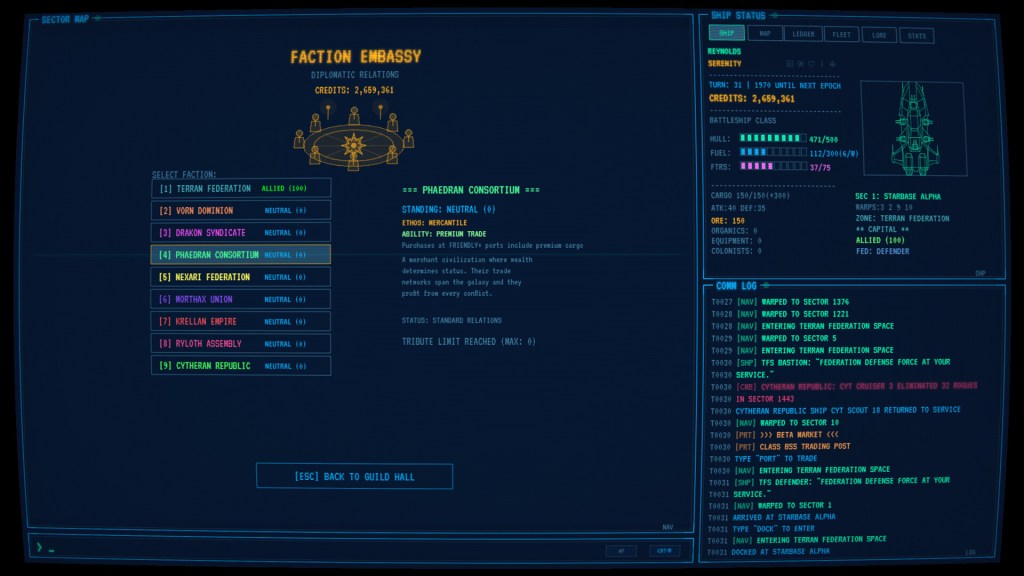
A Galaxy That Won’t Sit Still
Warp to Sector One doesn’t believe in static universes. It believes in 2,000 procedurally generated sectors, each stuffed with enough hazards, anomalies, and questionable warp lanes to make any insurance agent faint and it just doesn’t just generate galaxies, it unleashes them. Pirate nests hide behind one‑way warps, rogue fighter swarms materialise at the worst possible moment, and trade hubs fluctuate between “incredible opportunity” and “deeply suspicious.” Even the planets seem to wink at you, daring you to colonise them. And the anomalies? They promise treasure but often deliver emotional damage.
Just when you start feeling confident (maybe even competent) the galaxy taps you on the shoulder and whispers, “Epoch Event time.” Every 2,000 turns, the entire universe reshuffles itself like a cosmic deck of cards. Pirate Uprisings flood the map with hostiles, Trade Booms turn your cargo hold into a profit geyser, and Faction Wars redraw borders with all the subtlety of a toddler with crayons. Your carefully plotted routes? Gone. Your sense of stability? Also gone.
Across six distinct epochs and a looming Final Epoch, the galaxy refuses to sit still. It mutates, reacts, and occasionally throws a tantrum. Long campaigns never settle into predictable patterns because space in Warp to Sector One is alive, temperamental, and just a little bit rude and that’s exactly what makes it so compelling.

Colonies, combat and beyond…
Combat in Warp to Sector One is built around precision and pressure, offering two distinct systems that demand different forms of tactical thinking. Advanced Combat focuses on timed, multi‑phase engagements where stance selection, momentum shifts, and mid‑battle event decisions can determine the outcome of a fight. For larger confrontations, Fleet Combat brings full‑scale ship‑to‑ship warfare, with your hired captains coordinating alongside you to manage positioning, firepower, and survival. As you push outward from the core, the threats escalate from small pirate hideouts to raider bases, corsair strongholds, and eventually powerful endgame encounters.
The deeper you travel, the more the game tests your readiness and discipline. Each warp into a new region carries increasing risk, and the progression of enemy strength ensures that combat remains challenging throughout a campaign. Whether you’re navigating a tense one‑on‑one duel or commanding a full fleet in hostile territory, the combat systems reinforce the game’s central theme: space is dangerous, and every decision matters.
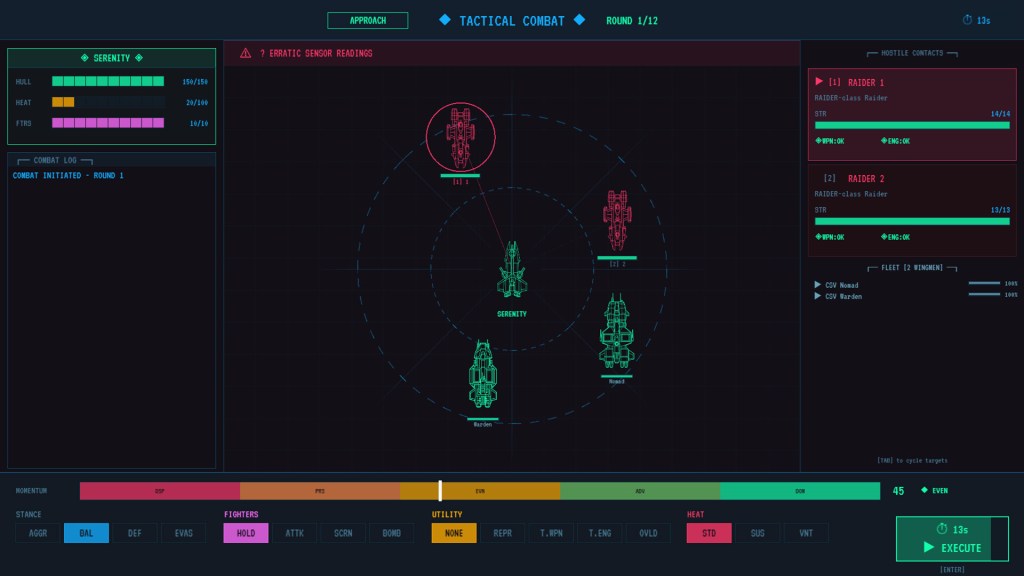
Colonies in Warp to Sector One form the backbone of long‑term expansion, allowing you to establish Mining, Agricultural, Manufacturing, or Fortress settlements across the frontier. Each colony type contributes differently to your growing network whether through resource production, defensive strength, or industrial output and together they generate the passive income needed to sustain a larger fleet. As your territory expands, you can also deploy fighter squadrons from these worlds, reinforcing strategic sectors and securing vital trade routes.
Progression through the Guild Rank system ties all of your accomplishments together. Rising from Recruit to Admiral requires demonstrating capability across multiple pillars: accumulating wealth, succeeding in combat, exploring the galaxy, founding colonies, building a capable fleet, and increasing your lifetime earnings. Advancement reflects not just power, but breadth, rewarding players who engage with the full scope of the game’s systems and steadily transform their small operation into a far‑reaching interstellar presence.
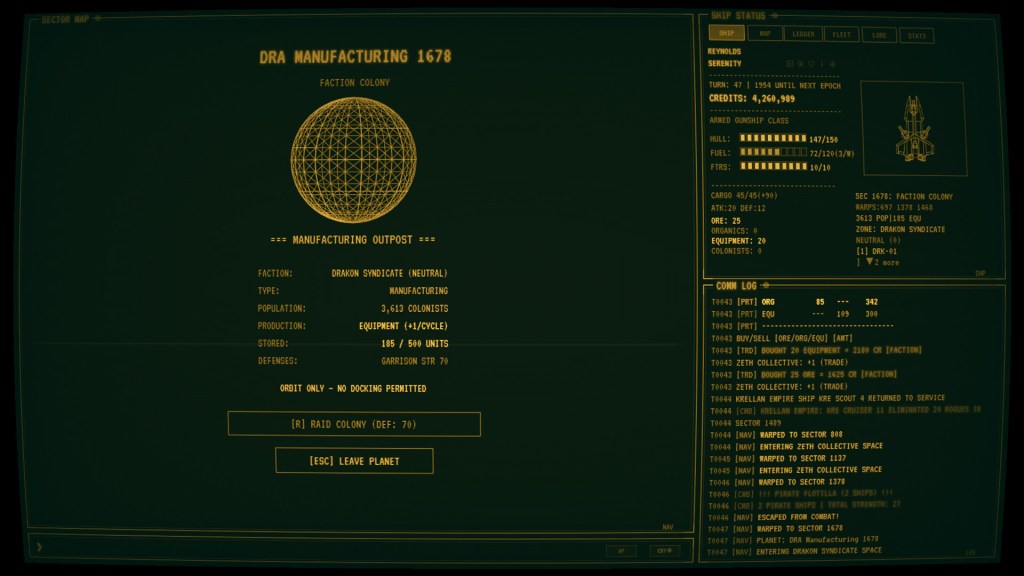
As a final thought, Warp to Sector One stands out because it confidently embraces what it is: a retro‑styled space sim with modern depth and a galaxy that refuses to sit still. It blends the aesthetic of 80’s sci‑fi terminals with a robust trading, exploration, and strategy framework, creating a universe that feels dynamic, unpredictable, and consistently engaging. Every decision whether economic, diplomatic, or tactical feeds into a larger story shaped by the player’s choices and the shifting conditions of the galaxy.
For anyone drawn to games that evoke the look and feel of old starship navigation consoles while delivering meaningful systems and long‑form progression, this is a compelling experience. You begin with a small ship and limited resources, but the path ahead is wide open. Your ship is ready, your fuel is low, and the next warp jump may define your legacy among the stars.
Warp to Sector One is due to be out on Early Access soon but in the mean time you can play a generous demo on Steam!
Deep Space Merchant – The Terminal‑Driven Tycoon That Turns Profit Into Pure Adrenaline
In an era obsessed with cinematic graphics and sprawling open worlds, Deep Space Merchant does something bold: it strips everything down to a glowing terminal screen and dares you to build a galactic empire using nothing but numbers, instincts, and cold‑blooded economic ruthlessness. It’s a love letter to pure mechanics, an economy sim where every credit matters, every decision echoes, and every day brings a new twist in the void.
This is not a game that holds your hand. It hands you a command prompt, a struggling outpost on the edge of known space, and a galaxy full of traders, pirates, and unpredictable markets. Then it asks the only question that matters: Can you turn this lonely station into the wealthiest hub in the stars?
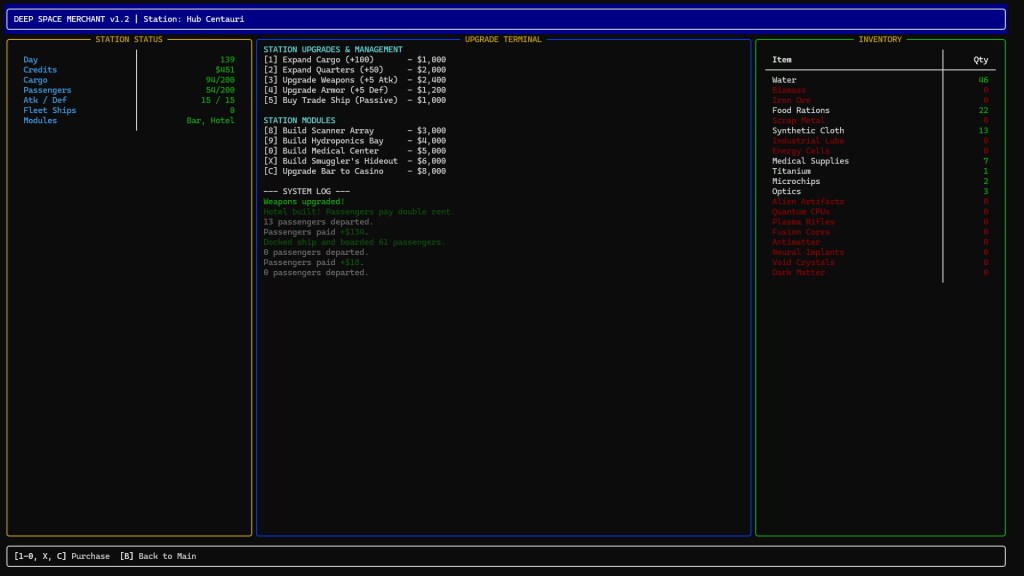
A Terminal Interface With Infinite Depth
The first thing you notice is the aesthetic. Deep Space Merchant embraces a retro, text‑based terminal look. No scrolling, no clutter, just crisp lines, fading logs, and a minimalist UI that feels like a cross between a starship console and a financial command centre. It’s atmospheric in a way that flashy visuals rarely achieve. Every log entry feels like a captain’s note, every ambient event a whisper from the void.
The game’s 200+ ambient events, derelict cruisers, strange signals, food spoilage, unexpected visitors give the station a sense of life. You’re not just managing numbers; you’re running a living outpost with history, risk, and personality.

At its core, Deep Space Merchant is about the intoxicating loop of buying low, selling high, and scaling your operations into something monstrous.
You begin humbly trading Scrap Metal with scavengers and patching together enough credits to expand your cargo bays. But the economy is deep, volatile, and endlessly procedural. Before long, you’re negotiating mixed cargo bundles, juggling 20 unique sci‑fi commodities, and dealing in exotic materials like Antimatter and Dark Matter.
The game’s economy is alive. Prices shift. Markets react. And most importantly, the galaxy adapts to you.
Profit, Peril, and Predators: Life at the Edge of Deep Space Merchant’s Economy
The economy in Deep Space Merchant isn’t just reactive, it’s predatory. An adaptive AI constantly studies your behaviour and strikes whenever you grow complacent. Hoard a single commodity and the market might collapse beneath you. Sit on a fortune without investing in defenses and mercenaries could stage an inside job. Expand your fleet too aggressively and a pirate blockade may descend to choke your profits. The game refuses to let you coast, forcing you to evolve your strategy as the galaxy pushes back.
Your station, meanwhile, becomes the heart of your growing empire. Every credit you earn can be reinvested into new modules that shape your playstyle, from Hydroponics Bays and Medical Centers to Scanner Arrays, Smuggler’s Hideouts, Hotels, and even a full‑blown Casino. Each upgrade expands your capabilities but also increases your upkeep, turning growth into a delicate balancing act. Build too quickly and your expenses can spiral out of control; build too slowly and you’ll fall behind the escalating threats of the Outer Rim.
And when opportunity outpaces your wallet, the Intergalactic Bank steps in with high‑interest loans that can either fuel explosive expansion or drag you into a catastrophic debt vortex. Combine that financial tension with rising pirate raids, rare high‑stakes events, and the constant risk of a single miscalculation, and you get a survival‑economy hybrid that feels alive. Deep Space Merchant thrives because it trusts your imagination. Its minimalist terminal interface becomes a stage for tension, triumph, and the addictive rhythm of exponential growth, making every victory earned and every loss unforgettable.

If you crave deep economic systems, adaptive AI that refuses to let you relax, minimalist sci‑fi vibes, and management gameplay that scales into infinity, Deep Space Merchant delivers all of it with razor‑sharp focus. It’s the perfect experience for players who love watching numbers skyrocket, strategies evolve, and small decisions ripple into massive consequences. Every mechanic is tuned to reward clever thinking and punish complacency, creating a loop that’s as tense as it is satisfying.
What makes the game truly special is how confidently it trusts the player. There’s no fluff, no hand‑holding, just pure strategy wrapped in a retro terminal interface that turns every choice into a story. Mastery feels earned, profit feels powerful, and the journey from struggling outpost to galactic powerhouse is unforgettable. Welcome to the edge of the galaxy, Commander. The void is waiting.
Deep Space Merchant is OUT NOW on Steam!