Shadow Empire’s first DLC Oceania (Steam Page), by VR Designs and published by Matrix Games, releases later today. I’ve had access since the beginning of March but unfortunately have not had much chance to fully play it through for a proper review yet. That said, I thought I’d share some thoughts on what I have seen so far, in the hope that our readers can decide if it’s worth a buy for them or not.
First off, players should take note that this DLC does not feature player-controlled navies. The developer has hinted that this feature might be in the works for a later date, and I suspect Oceania is a halfway point towards making that a reality. But I hope to show you that despite all that, the DLC is well worth a buy.
First, a couple of disclaimers:
I should remind people that a little after the game was released, I did some unpaid minor sound effects editing for VR Designs, so my name is on the credits of the game. I’ve also done a few weeks of closed beta testing, and we’ve interviewed Vic on our podcast a couple of times. That aside, I’ve no stake in Shadow Empire’s success beyond being its biggest fan, but in the interests of journalistic integrity, it’s important you see this potential conflict of interest and make up your own minds about my opinions on the game as a consequence.
A final point is that this article was copied from a piece of written feedback made during the beta process today, with all NDA’d content removed, and in the interest of releasing it in a timely fashion, I’ve pushed it out with minimal editing, so I apologize if this one quite up to my usual article quality.
So here are four things to consider before you buy Shadow Empire’s first DLC Oceania.
#1: What You’re Getting
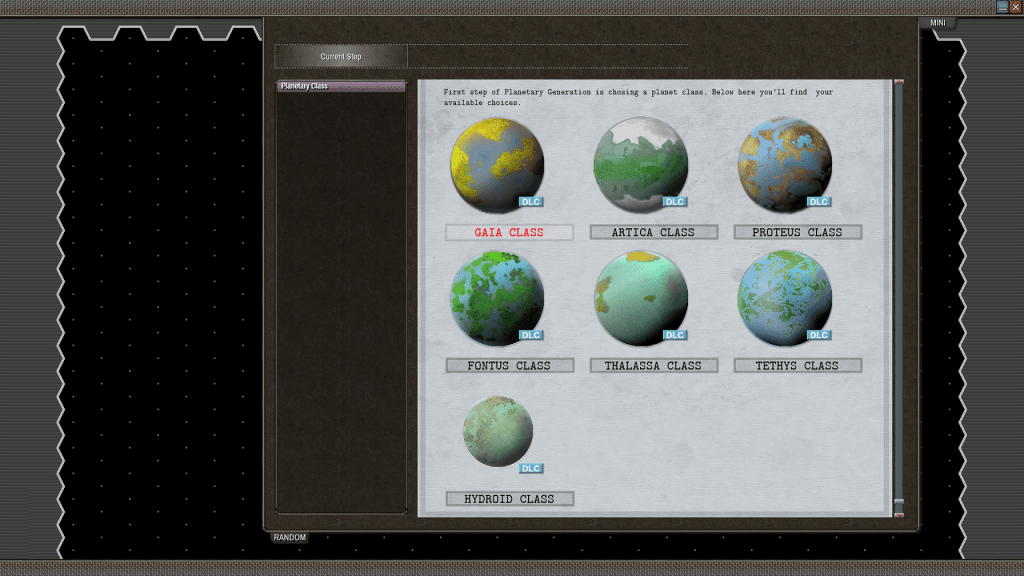
Oceania has two main features: seven new planetary classes for map generation (and the Oceania DLC content being added into the Unclassified Class (SE’s true random map setting), and the Maritime Trading Houses (MTHs), a set of abstracted waterborne warlords and their crews, who play a big role in naval transportation and vie with one another for control of the seas on these new ocean planet types and provide exploration, naval invasion and logistical support for Major Regimes in their efforts to conquer a planet no longer completely linked together via the land.
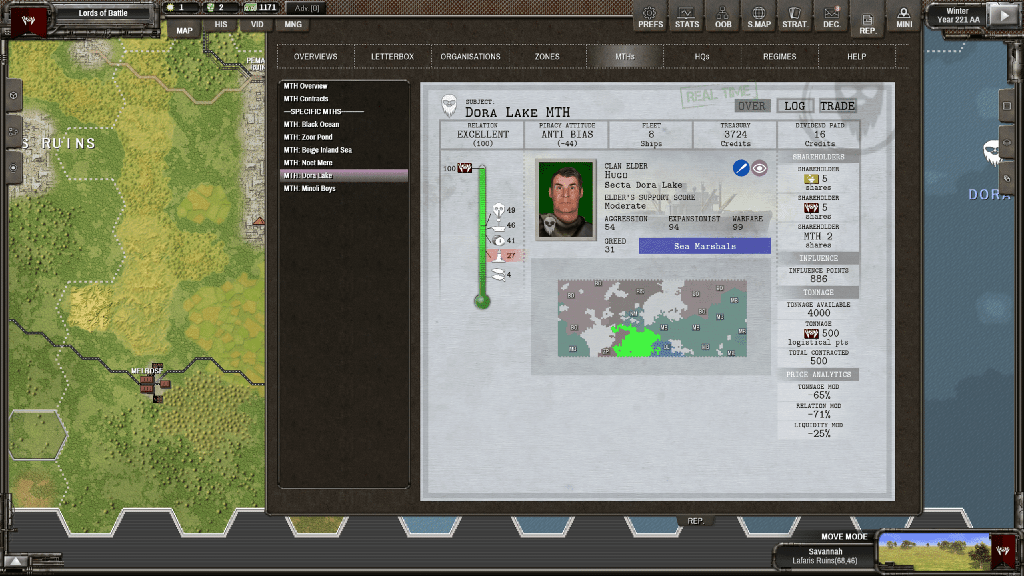
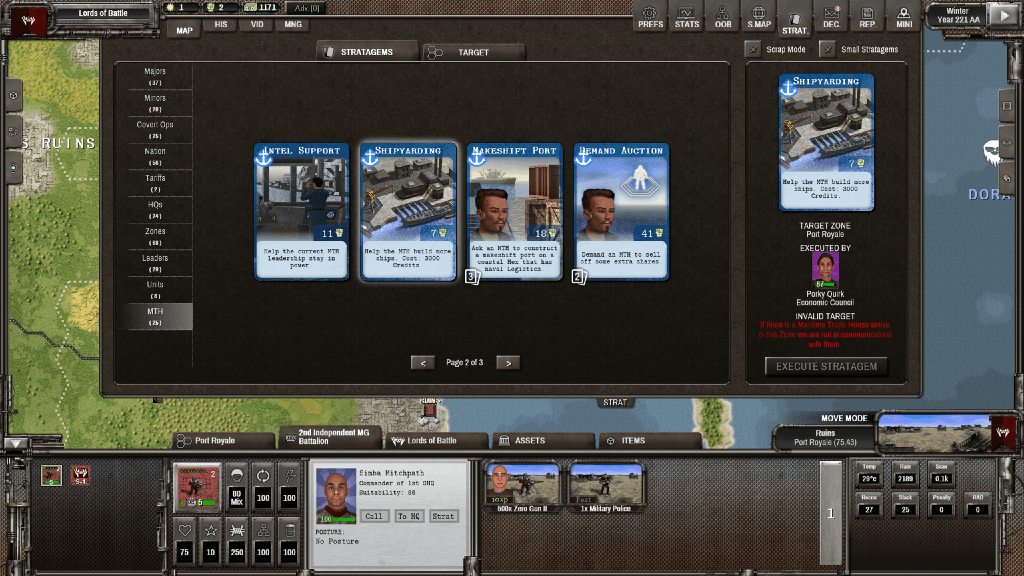
I’m not going to go into detail on how it all works. I suggest you check out some gameplay footage for that as it’s pretty complex, and time is short, but in a nutshell here’s what MTHs do. Essentially, the oceans are split into regions controlled by different MTHs, each with its own set of personalities and statistics. These guys control the waves and approach the player with offers of business, Strategem cards are used to initiate diplomacy and contracts, and they will also engage in warfare with one another. The player can invest in one (or more) through a share trading system, building up a reputation that reduces the cost of various services they offer and can try to support them in their wars with their rivals. MTHs are also trying to win their own little game of Shadow Empire with one another, and to be successful themselves, the player needs to watch that game and occasionally stick their oar in to steer things to their own destination.
#2: New Planet Types
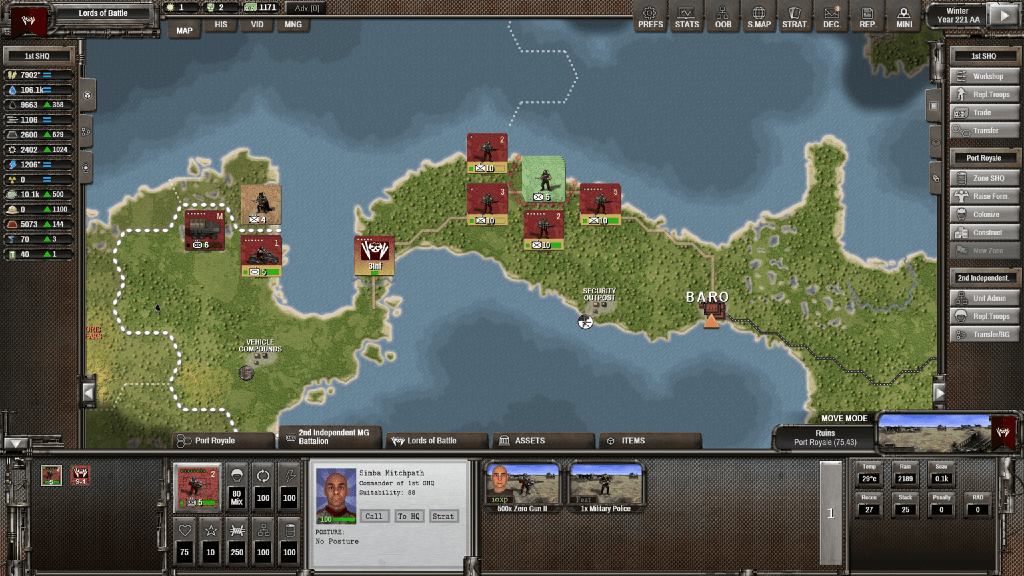
I didn’t realize that I needed Oceania’s new planets until I generated a few, but having done so, I’m sold. Even without the MTH content, I think this would be a worthy upgrade to the base game, because not only are these Earth-like planets more familiar, and thus more believable (and for me, the way SE plays with the imagination is incredibly important to the experience as a whole), but they play very differently too, even in the early game before the MTH stuff really comes into play. I spent about ninety minutes today just Quick Planet generating maps, and admiring the variety of terrain and challenge they created.
On the original planet classes, while I like the large landmass games, I was increasingly adding more mountainous terrain or forests to my games to slow things down and raise the value of infantry and airforce tactics. As a result, I’m quite happy playing with 40% mountain coverage on a map, but I feel that the Oceania Planetary Classes are now fulfilling a similar purpose in imposing physical constraints on expansion. Not everybody loves endless expansion, and pre-Oceania, even with Limos or Siwa class planets, you’d still feel compelled to sprawl your empire and play very wide. Shadow Empire is one of the few 4X games on the market where playing tall is viable, and Oceania’s maps help shape that kind of play style into something a bit more tangible for the player. I can see that using the MTHs, you could also play very wide too, but the oceans do naturally constrain your territory and this might well be a game-changer for a lot of players.
A new mechanic, whereby the MTHs are paid by pirates to drop forces on your shores, prevents the player from just sitting pretty and working through the tech tree to Shadow Empire‘s nuclear equivalent of the Civ’s Technological Victory. While I can foresee some people complaining about having “Pop-Up Pirates” arrive to maraud their coastlines from time to time, in practice this really is no different from having to guard your land borders in vanilla Shadow Empire. Not only does this feel more realistic to me (us Brits were quite used to having aggressive seamen land on our coasts, literally out of the blue, to raid, rape, and pillage) but it provides some early game challenge that was previously provided by the minors/majors immediately next to you. Once you’ve got your head around the fact that your little island/continent is not a safe-space for passive turtles, and keep some defensive forces guarding your coasts (something I rarely needed to do on the inside of my empire in vanilla Shadow Empire outside of multiplayer, to guard against airlifted commandos) this goes from being frustrating to fun. Oceans are not hard borders, as they’re not in real life, and I like this. What some are calling “whack-a-mole” I call “free field-testing points”, and whack-a-mole implies you’re not ready for the invasion, and a smart commander would guard their borders, right?
Expanding out to take territory on smaller islands is very satisfying, especially when they lie halfway between yourself and an enemy nation. Having some kind of Midway Island loaded with airfields, allowing your air forces to engage enemies on the coast as you invade a naval landing is the kind of thing I was dreaming about for this DLC.
I’m theory-crafting on the descriptions below, as I’ve obviously not had time to play them all yet, but I can see their potential already:
Gaia Class presents an Earth-like planet, and I think this will be nice for players who want to play Advanced Tactics Gold with the Shadow Empire mechanics. I expect a lot of my games will be played on this map type, as I do like playing with forests and abundant resources from time to time.
Artica Class is interesting because it generally presents a map with traverse-able poles, linked by a series of “land-bridge” continents. This is probably the closest map type to the base game content and will sometimes allow players some option to either engage with MTHs, or not. I like this map type: I had to think about it a bit when I saw it, but aesthetics aside, it provides a unique gameplay challenge the others do not.
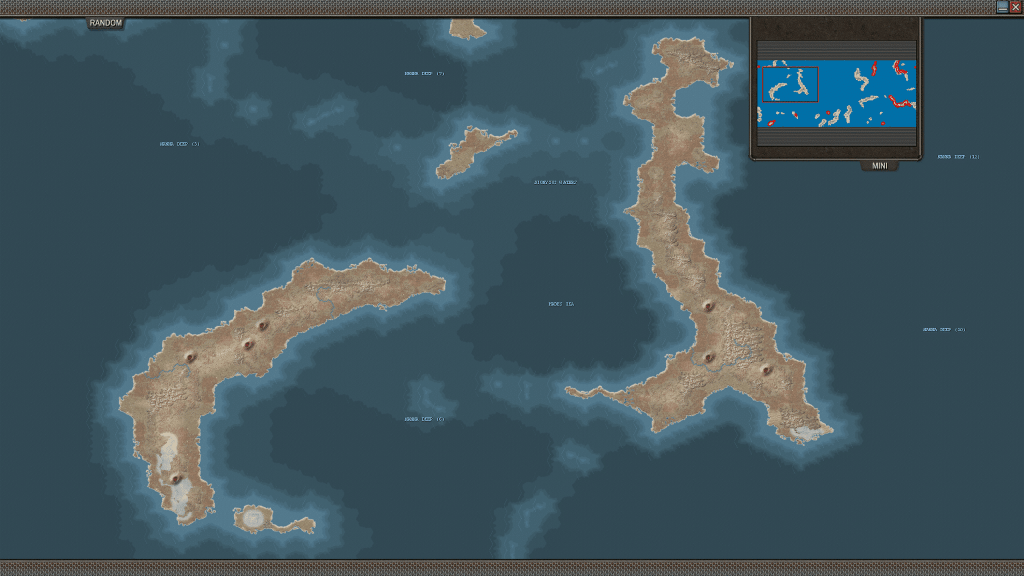
Proteus feels like a classic apocalyptic Shadow Empire, but with more oceans. I got it to generate a rather realistic-looking Australia, where there was just one big Pangaea-style desert continent with temperate borders and some smaller islands scattered around. Just add hostile flora and fauna, and mad beer-swilling natives, and we’re there. Wonderful stuff! I was not expecting that at all, and with most of the Majors starting in the centre of the desert and having to expand outwards towards the habitable coastlines, this looks like a superb challenge.
Thalassa looks like it’ll be a nice challenge for those who really like smaller empires or more spread-out ones with lots of MTH. This one really needs the Spread Out history class though, as otherwise it’s still often starting most players on the same landmass.
I think it’ll take some time for the community to get their heads around just how much of a game-changer these planet types and their physical characteristics will be. For a start, I’m fairly sure I’ve never met another player who ever bothered with extra SHQs, something I regularly do now, and this interesting contraction we see with ocean-based gameplay will likely incentivise experimentation on this front. In fact, in a broader way, I think certain players will probably try to shoehorn in their usual style of play, with all the same settings as non-ocean planets, and will quickly find it doesn’t work, and while I do see some potential friction there and the inevitable hyperbolic whiny Steam reviews, it’ll be important to emphasise that this DLC is widening the sandbox element of the game, a crucial point I think.
Some criticism: the game by default is not taking advantage of these nice islands and continents and too regularly grouping all or most of the Major regimes right next to one another on just one continent, with the rest left as some kind of “New World” to explore. This is a wasted opportunity, and although I know the Spread Out history lesson exists, I think that the game could still be tweaked a bit here, to prevent such close clustering. I don’t like Spread Out for single-player games, I like the pressure of early Major AI interaction, but how about we get a mid-point, where there are a couple of majors on each major continent, some on smaller islands? And while we’re at it, why not create a new history lesson where all the Majors are all packed in close like sardines for those of us pre-release grognards who miss those crazy ol’ pre-1.0 knife fights?
#3: Maritime Trading Houses
I’ve still not seen all the MTH content but what I have seen, I love so far. This is exactly the kind of thing I was hoping for when “better trading house mechanics” was on the table, because it not only adds another layer to the gameplay that requires some strategic foresight on the part of the player but also a turn-by-turn series of meaningful decisions that help steer the game in accordance with your general game-plan.
Getting an MTH to make critical plays for you, like transport contracts, is a doddle to figure out and doesn’t require any arcane chicanery to make work, but playing their little shares and relationship game will make it cheaper to do, so the player is incentivized to nurture their chosen MTHs. And when their investments come under threat, it becomes a crucial lynchpin for further geopolitical wrangling and wars. This is excellent game design, in my humble opinion, and follows on from the previous base-game onboarding mechanics, like the private sector automated asset building and militias, that draws you into the more complex side of the game gradually and gives you a reason to engage with all the wonderful stuff Vic has filled the game with. This kind of fine detail is very hard to make work for non-grognards, but Shadow Empire shows us how to do it well. MTH interactions are simple on the surface (the player already knows how to use strategems and make decisions), yet continual interaction reveals deeper gameplay, particularly with the way the MTHs interact with one another, and with the land-based factions.
In this respect, this is not some “abstracted god” with horrible power over the player to make or break their game arbitrarily, instead, it is an engaging way to make naval gameplay interesting without trying to solve the seemingly impossible AI riddle of making hex-and-counter naval landings work in a mostly land-based, procedurally generated wargame. Many have tried, and all have so far failed to the best of my knowledge. The best naval simulation games are always real-time because ships don’t really sit still and can’t easily be found if they don’t want to be: boats work in fleets with missions, and it is those missions that project their power, not the physical location of the boats themselves.
#4: Gameplay Thoughts
There have been some concerns from onlookers that brought up some valid points about further abstracting control away from the player, as the MTH system does indeed throw the player another level of complexity that takes much interaction and economic investment before they see results, and occasionally the roll of the dice can increase the difficulty in an already challenging game. While I disagree that this is what is happening exactly and that I am biased as I love well-designed abstraction in strategy games, there are always those in the community that want “more direct control! more min/max!” and so on. The MTH system requires the player to make difficult choices, both early on and as their campaign progresses, and I think this is a net benefit for the game as a whole because it directs the player’s attention towards these new mechanics, rather than just spread it out amongst more counters to push, and the net effect is one of greater depth of gameplay.
One of the big complaints I regularly see coming from 4X gamers at eXplorminate is frustration with large empires and amounts of units to handle in the late game. Oceania is going to provide an option for those players, who might not want to just play tiny maps to deal with this issue, while still having some limitations imposed on the number of troops and cities being manually handled. At the same time, the MTH-meta game is detailed and involving enough that this isn’t just a mere reduction in the player attention being spread over many things: oceans and MTH weave in a new layer of long-term strategic planning and turn-by-turn decision-making that isn’t intrusive or overloading on that attention.
Crucially, in terms of the player experience, the DLC content makes the game “taller”, and potentially a little less “wide”. What I mean by that, in this particular context, is there is potentially less of the mundane counter-pushing and more of the deep, meaningful grand strategic decisions that make 4X and wargames so compelling. That said, I live for mundane counter-pushing, I never get bored of this game, but I think this is a net gain for those who prefer more varied gameplay and aren’t so enthusiastic about 70-hour-long games with 60+ zones and 3 SHQs to manage.
It’s also difficult to disentangle the myriad of small changes that have been made to the base game from what the DLC is explicitly adding: aside from my big MP game I’ve not played much Shadow Empire in the last six months and, when I have, I’ve still been trying to work out the airforce stuff (and whether the AI is using it properly or not). Taken as a whole though, the game feels a lot smoother and faster to play. The performance changes are palpable: I’m currently playing a small Gaia map with the game AI speed on the quickest setting, and the turns are taking less than 10 seconds to process even in the mid-game. This is excellent stuff, much improved from before.
Summary (So Far)
To summarise, I love it! This feels like it was made just for me because it ticks all the boxes that made Shadow Empire such a compelling experience in the first place: complex gameplay with interlinked systems that are opaque and random enough that I’m not tempted to just find the “optimal” solution and ruin things for myself by excessive min/maxing, while remaining engaging and clear enough to explore and feel well rewarded for using.
There’s clearly some balancing work to be done here and there, as expected when you integrate a system as complex as the MTH with an already complicated simulation, but this is exactly the kind of thing I was expecting from Oceania.