Shadows of the Forbidden God (Steam Link) is a strong contender for the most “Evil” strategy game if such an award was to be given away. While the player takes the role of a dark god in the hope of running the world into the ground and bringing an era of darkness, the forces of Good organize resistance in an effort to drive back the shadow and save the world.

#1: A Lively Character-Driven World
The game simulates a living, breathing world of warring nations, developing cities, and influential figures, all with their own character traits and goals. The player’s mission is to use stealth, espionage, and other covert operations to keep their own agents out of sight until the time is right to strike, and bring about victory!
The NPCs’ activities are dictated by their personal motivations and given roles. They will travel around the map on missions, from simple ones such as eradicating a group of bandits or defeating an orc incursion to hunting down the player’s agents in their quest to save the world.
The diplomatic relations between different nations and cults are also based on the interaction between their members, so world events depend as much on their state of mind as it does on politics and economy. In that way, the early and mid-game has you in the role of a puppeteer, setting the stage for the final invasion and manipulating characters into acting against their interests through subterfuge and sadistic powers unique to every god.
The late game is where the gameplay can change drastically depending on which god the player chooses. The first god available manifests as a giant snake into the world, more powerful than any army or hero. It can destroy the world single-handedly or die in agony if the forces of Good corner and kill it. Other gods can turn the world’s nations against each other until they have all been corrupted, ending the world in a silent whimper rather than with a bang.
#2: Overly Simplistic Yet Omnipresent Combat
If the characters are what most of the game revolves around, then the combat between them is too simple to sustain that focus, which is a shame as many of your agents will find their end in these battles in a boring minigame, instead of an epic battle befitting the stakes being fought over. And that’s not as bad as the combat between armies, which boils down to throwing numbers at each other until the biggest number wins.
The great big snake god towering over a city ready to devour all its soldiers and inhabitants is just a big number that faces off against enemy armies that are also simple numbers. They spend a few turns on the same tile, lowering their respective values, until one of them is defeated or leaves. And forget about tactics or strategy, these armies will simply fight until one of them dies.
On larger maps, there are more nations, so naturally more wars. So much of the game depends on these wars, and so many of the player’s actions lead towards them in the effort to divide and conquer and set up the later stages of the game, that they seem like a squandered opportunity for bringing something epic to the mix. It is when there are fewer wars and armies, mostly on smaller maps, that characters and their actions stand out in the decisive moments of the game.
That’s where immersive stories form, and where the most memorable things happen. Good stories are character-driven because they allow us to connect to the story on a personal and emotional level, and help us invest ourselves in the big picture.

#3: Great Stories Hampered by Problems with Tone and Polish
The potential for character-driven stories, forming out of the complicated interactions between the evil god’s agents and their enemies, is what will drive most players to play one more turn. Characters have family ties and friendships, allegiances, professions, and more. As the game progresses they will change, develop hatreds, and rivalries, fight wars, and hunt each other down. In many ways, the game feels like Crusader Kings, but much more character-oriented.
Story elements are woven into the game through multiple-choice events, often involving one or more characters. But after playing a few games, the player will have often clicked on the same choices and read the same flavor text too many times. This is where modding comes in. The game content is almost doubled even in early access, by the collection of player-made gods, characters, and stories. But there’s a caveat: the game itself seems to be unfinished in many ways, with a disparate mishmash of art and themes.
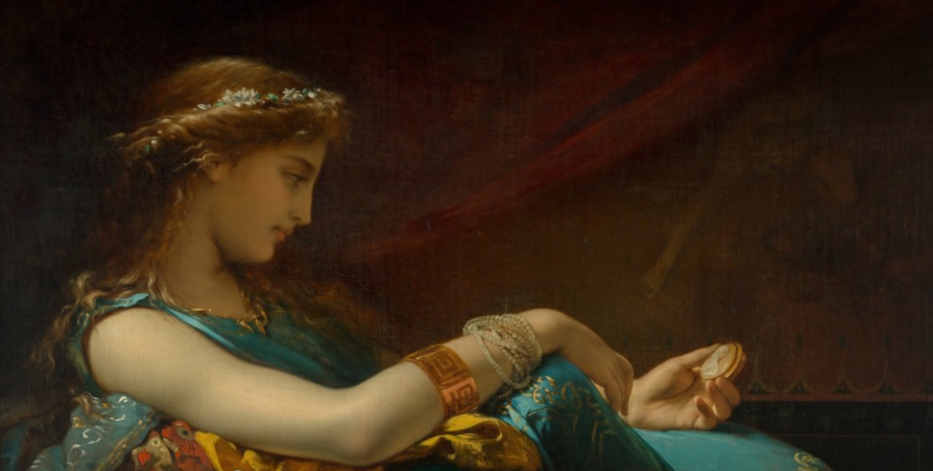
At first glance, it is thematically inspired by horror stories from the late 19th and early 20th centuries with a special nod to Lovecraft and his generation. Many of the characters use original art from the later part of the 19 century. The Harvester is a character that collects the souls of the dead, and spreads death and destruction in his wake. He is represented by the painting “Le Temps” by the artist Ulpiano Checa y Sanz, and some of the events like the “New Achievement Screen,” is the painting “Remembrance” by Pierre Olivier Joseph Coomans. Much of the game follows this pattern, with classical art, presumably used under a creative commons license, to represent locations, creatures, characters, and events. But at the same time, the map itself is built from hexagonal map tiles typical for contemporary fantasy games. Many characters are painted in completely different styles that range from finely done portraits to simple cartoons, and unfinished sketches that don’t stand well one next to the other.
The literary themes also take some bizarre turns, as the finely illustrated gothic atmosphere is broken up by typical fantasy tropes such as orcs and elves straight out of a D&D knockoff. As so much of the game is based around characters, the game can be thought of as a role-playing experience that is foremost dependent on immersion, in this case, hampered by a lack of art direction.
#4: Great Potential Held Down by a Messy User Interface
As mentioned, modding can fix some problems, allowing the player to build his perfect game, populating it with characters and creatures with any art desired. But the same cannot be said about the user interface. Where Lovecraft had his characters go raving mad at the sight of eldritch horrors, Shadows of Forbidden Gods can drive the player up the wall with its menu placements and notifications. While the player might endure it for the first few hours, in the hope that there is a method to the madness, eventually it becomes clear that some of the choices were not good, and many look to be not very well thought through.
There also seem to be elements that are unneeded and inherited from strategy games, like the hexagonal tiles the map is generated from. These don’t add anything significant to the game as the map is node-based, that is to say, the locations are connected by waypoints and all the characters travel along them, not on the tiles themselves.
The notification system can also be annoying. Messages will arrive one by one at the beginning of the turn, obscuring the map and stopping the player from doing anything before choosing “dismiss” or “jump to”, the second option taking the player to the location, only to be immediately stopped from dealing with the problem by another message. Important information, like the activity of characters in locations, is packed in menus at the edges of the screen, instead of integrated into the map. Some actions take too many clicks when only one should have been enough, and some menus are hidden or badly organized.
The map filters are supposed to help with finding important information, yet they obscure the whole map in stark black, obscuring the border between the land and sea, or even the locations’ icon art. This isn’t conducive to finding your way around the world, especially on larger maps filled with many locations, most with a generic name.
My biggest complaint would be that on bigger maps the gameplay crumbles, and not because of the game systems, but because of how information is organized and presented to the player. With its rich modding potential, the game could be finished by its passionate community, but only if the developer fixes the UI first.
Conclusion
Shadows of Forbidden Gods stands out among similar games in the way it builds a story with its character-driven gameplay, even though it inherited some elements from strategy games that could have been left out in pursuit of its core qualities. Unfortunately, with the clash between the art direction and its world-building often taking center stage, the player’s attention is rarely allowed to suspend their disbelief long enough to really engage with their role as a dark god, intent on ending the world. Despite that, there is a demo, that is still worth a try!