Let’s just rip the bandaid off: Have you played Heroes of Might and Magic 3?
I know. I hear your groans. At this point, it’s thoroughly cliche for touchstone games to get trotted out and compared to any new 4x or 4x-adjacent. Any game that starts with little people in loincloths discovering farming is compared to Civilization. Any game with galaxies and spaceships is compared to Stellaris. Any game with swords and spells is compared to Master of Magic. And these comparisons will, inevitably, not be favorable. You can’t go home again.
But Songs of Conquest (Songs) openly invites this comparison – partly out of deserved pride, partly because pretending otherwise would be like hiding an elephant behind a bedsheet. The store page is at least a little coy, identifying it as a “turn-based strategy game inspired by 90s classics,” but it means, very specifically, Heroes of Might and Magic 1-3.
There’s absolutely zero room for doubt here: Heroes informs every bit of Songs of Conquest’s design. Multiple instances exist where entire systems directly respond to imbalances or shortcomings in Heroes of Might and Magic 3. These instances will likely seem clever (or at least make sense) to Heroes veterans, but if you haven’t played Heroes, you’re more likely to find these systems feel artificial or convoluted.
Are you already familiar with Heroes and just want to know how Songs is different? Feel free to skip the next section.
For Those About to Rock
So you haven’t played a Heroes game before, or the sentence “Songs has the same gameplay loop as Heroes” leaves you completely befuddled about what to expect. No problem!
The basics are pretty simple: you control a limited number of commander units which Songs call “wielders” who lead your forces into battle. Unlike hero units in Age of Wonders or Total War: Warhammer, your wielders do not take up an army slot or directly participate in battle. Wielders are the most critical game object for a simple reason: basic rank and file forces can’t move around the map independently. Player-controlled units must be led by a wielder.
On most maps, you’ll also either begin with a town or rapidly acquire one. Towns do what you’d expect, allowing you to recruit units and/or generate passive income, depending on the structures you choose to build in them. Barring special loss conditions, you’re still in the game as long as you hold at least one town or still have one wielder alive.
However, it’s very important to note towns cannot be built. There is no way to plop down a new town on the map: the map begins with as many towns as it will ever contain. This is critical because all towns are not created equal. The best have enough land to support massive walls and multiple structures of varying sizes, while others are quite small and have only a few building slots.

So far, this could all make for a very gritty, dry, tug-of-war kind of wargame, similar to the earlier Warlords titles. And in close matches, the game certainly can become grindy as massive forces clash, margins are narrow, and no one clearly has the advantage yet.
However, there are multiple ways to gain an edge over your opponent, making up the “secret sauce” of the formula. Firstly, wielders are much more than just the bus drivers for your armies. They’ll gain experience from winning combats and visiting special map objects. Where there are experience points, there are, of course, levels, stats, and skills to choose from, which influence how strong your units are. So, while you may not have played a Heroes game, if you’ve played any other turn-based strategy game in the past couple of decades, you’ve played a game influenced by it.
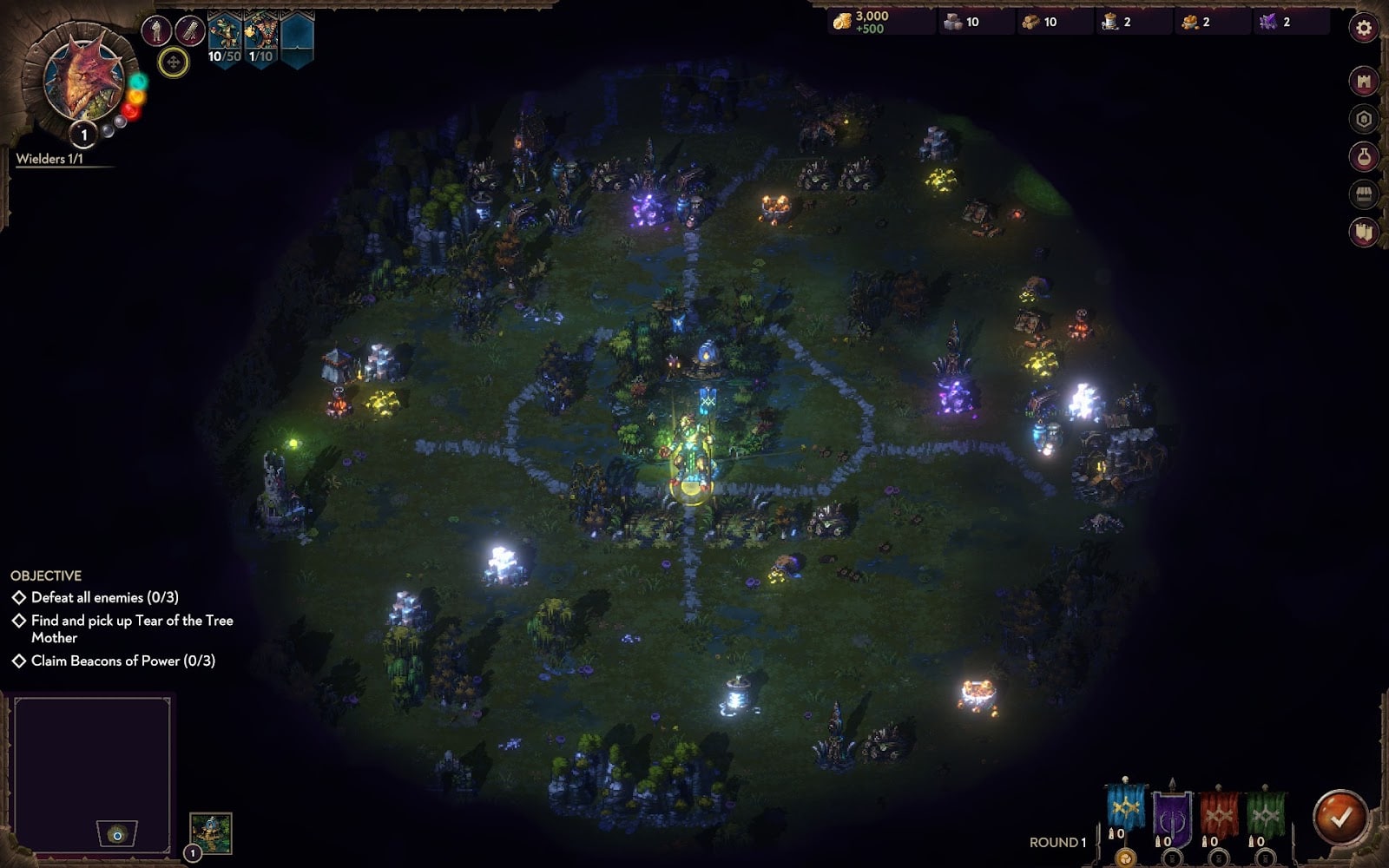
Second, maps are more than just playmats for pushing armies around (like they are in, say, Warlords). They’re jam-packed with stuff – resources, resource mines, artifacts to acquire and use, shortcuts, towers to scout the landscape, places to learn new skills, monster lairs, recruitment centers for specific units, and so on. The map is also full of neutral encounters – typically static packs of one type of unit not led by a wielder that stands guard over something of value. Often the strongest neutrals and greatest treasures lay far off the road to the next town. There’s also the simple value of the wielder experience gained in these encounters.
This probably sounds familiar if you’ve played an Age of Wonders game, though it’s worth making a distinction: in the Heroes (and thus Songs) formula, the map itself is a much greater (and richer) adversary than it is in Age of Wonders. Sure, your goal is to defeat opponents or complete scripted mission objectives, but the main attraction is adventuring across the map, growing stronger by exploring dangerous places and finding ancient treasures. And through these adventures and the choices you make along them, you’ll hopefully find the edge you need to begin pushing into enemy territory.
Games in this sub-genre also focus very heavily on asymmetry. Songs of Conquest has four unique factions with units sporting radically different stats and abilities. Wielders themselves are unique to the factions, and come with a faction-specific class and a specific set of starting stats, starting skill choice, and specialization unique to each wielder.
Classes determine the probability a skill will be offered to a wielder when they level up. In Heroes 3, there were two: Might, which focused on skills benefitting unit combat, and Magic, focusing on… well, magic. Songs follows the same general pattern with wielders who focus on unit-buffing skills and wielders who focus on making their magic stronger but add a third, more nebulously defined archetype. Sometimes these appear to be utility- or scouting-type wielders (they might have improved movement range, scouting skill, or even improve income), and other times they seem to be something closer to hybrids or generalists. The third archetype may even shift definition from faction to faction.

As an example, take M’sugna above. They’re about as obvious as they come, being a Seer who starts with the Creation Magic skill, a +40% Spell Damage specialization, and average stats. Rana’s Raiders, on the other hand, have combat-oriented skills and higher-than-default Movement and View Radius stats, but pay a cost in Offense and/or Defense. Finally, Awakened have average stats but the widest selection of starter skills, with one combat, one utility, and one magic option.
A final note on wielders: they don’t permanently die. When one is defeated, they’re carted back to town and can immediately be resurrected at great cost. Each turn that passes drops this price until after five turns, it’s free to resurrect them. However, when defeated, a hero drops all their equipment. If they die to a neutral monster, it’s just a matter of returning to the site to pick everything up again. But if they die to an enemy wielder, the enemy gets all their gear. This typically represents a back-breaking swing in power, and games are often decided by this one epic clash.
Ok! I think that’ll do for a crash course. Take one or more wielders of your choice (maybe), buy them an army, go adventure to explore and get more resources, build out towns, and repeat until you think you’re big enough to go smash the bad guy or the bad guy shows up to smash you.
Sing Us a Song, You’re the Reviewer Man
So you already know the basics of Heroes, or just read the previous section and are wondering how something can be a crash course when I barely mention combat or magic or economy or army building. It just so happens these are where the biggest deviations from the Heroes formula appear.
We’ll start with combat, the meat and potatoes of the game. It’s important to understand that Songs of Conquest is about, well, conquest. It’s somewhere in the gap between wargame and 4x: there is no diplomacy AI, no research victory, no spaceship to build. Your goal is to crush your enemies, see them driven before you, and hear the lamentation of their… frogs and zombies, I guess. You get the picture. If you’re not the type to enjoy tactical combat, you’re probably not going to find much value here.
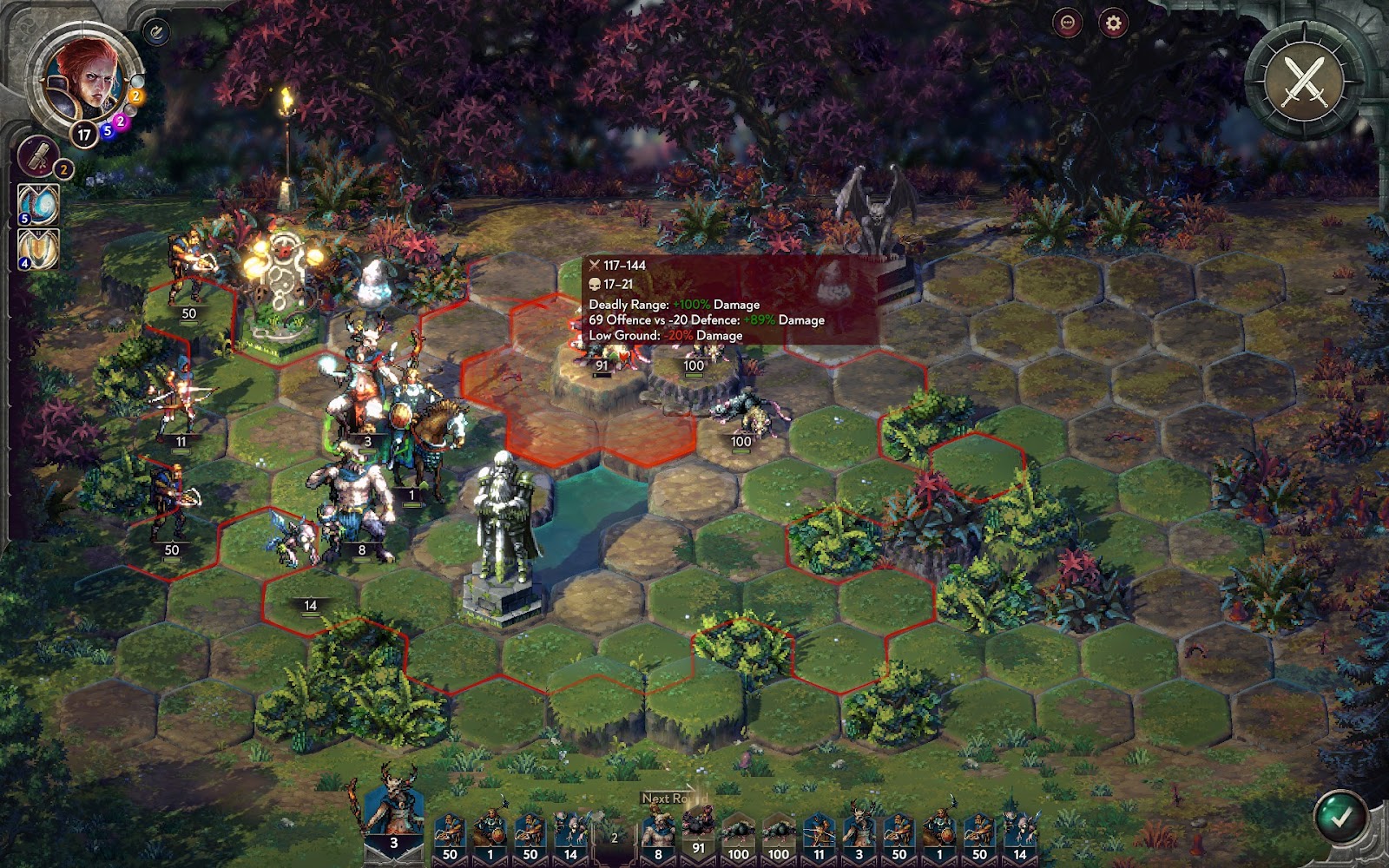
But if you do like tactical combat, you’re in for a treat. First, combat maps aren’t just fields of random obstacles like in Heroes. Maps often appear to have clear intent, which speaks either to intentional crafting or a more sophisticated random algorithms. An example might be a map where a lake is spanned by two narrow “lanes” leading both to the opposite side and to an island of high ground in the lake. There are several different directions a battle on this kind of map can take depending on the army composition of each side.
For Heroes vets, let’s go down the list of what’s new and different: there’s the elevation that grants intuitive damage dealt and taken bonuses (high ground good, low ground bad) as well as the zone of control and attack of opportunity mechanics. There is no Morale or Luck and no Favored Terrain bonus. I can’t say I miss any of those mechanics, considering you outright can’t have units that aren’t of your faction in your army at all.
Flying units aren’t a thing in Songs – though, strangely, some creatures are animated as flying. I’m less sure how I feel about this one. It means terrain always matters to everyone which is cool, but when you run into traffic jams in choke points and your fragile skirmishers (which at least appear to be flying) become just flat-out worthless, I do miss it.
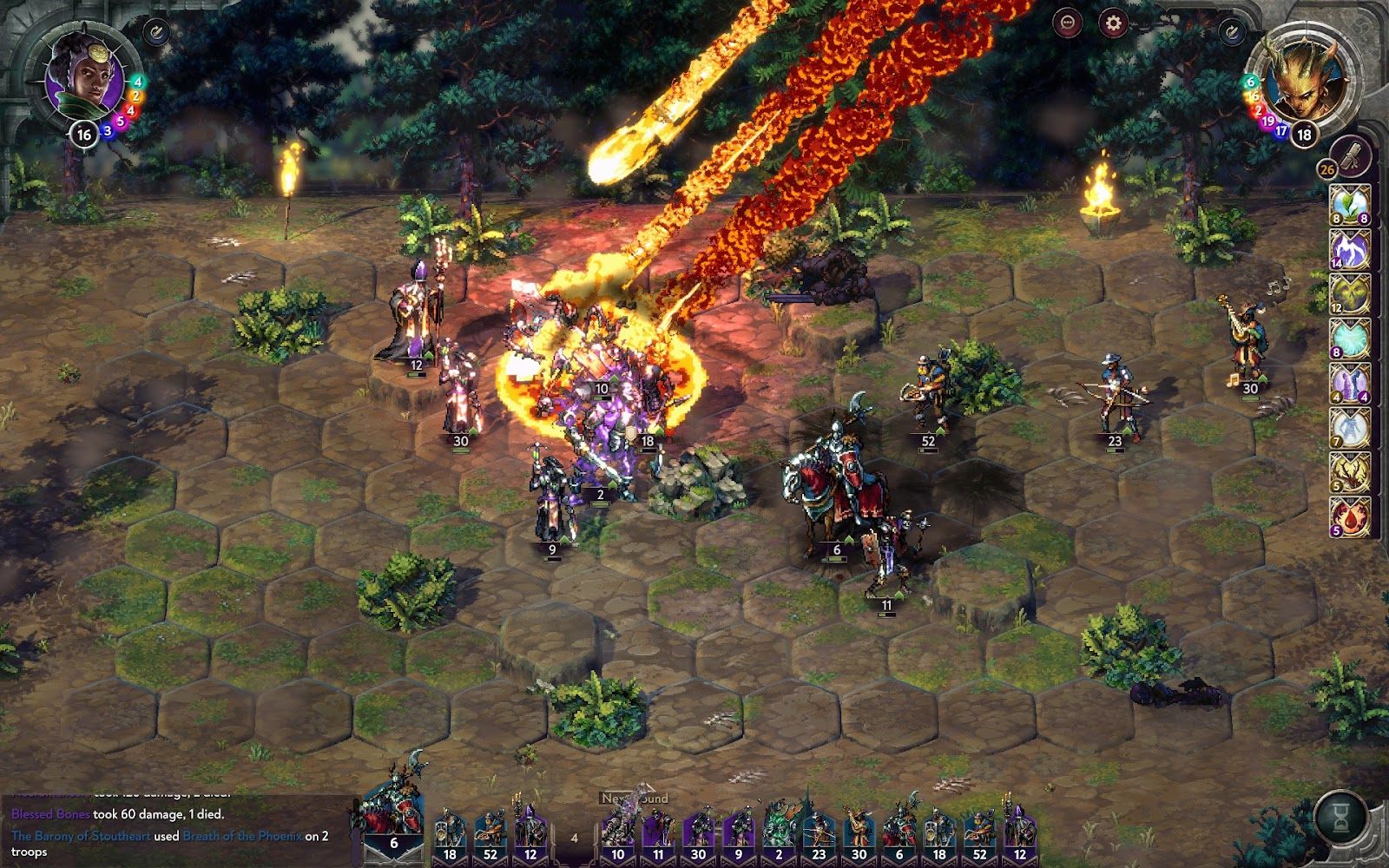
Each unit gets one action per round, and the order of actions is determined by the Initiative value. Unlike Heroes, Initiative is totally unrelated to how many hexes a unit can move per combat round. Additionally, there is no “Wait” command which delays a unit’s turn til later in the round, and unlike many other tactical combat systems, there is no default “Defend” command: the unit simply forfeits its turn for no benefit.
This makes high-initiative units feel a little awkward. Since you can’t delay a unit’s turn, having a high initiative actually encourages you to not act at all at the start of combat. Think about it: you can either spend your first turn crossing half the battlefield and putting yourself in an enemy’s striking and/or shooting range, or you can forfeit your turn, making them spend their turn closing the gap and giving you first hit next turn.
Remember how I said some choices might make sense to a Heroes fan but feel odd to everybody else? This is the first of those. In Heroes, the optimal play in nearly every combat was to spend your entire first turn using the “Wait” on all your units for the same reason: nobody wants their strong units to be the first to be vulnerable to full-power ranged unit fire. The opponent would follow suit; then the first turn would proceed in reverse-initiative order. It was tedious!
However, I’m not convinced the solution was to simply remove Wait. In fact, I think the game already has a more elegant solution in place: mechanics that tangibly reward smart positioning and battle maps that provide said positions. Sure, you could use the “Wait” command on your high-initiative unit in order to get an attack out of them this turn, but is that worth giving up the opportunity to control a juicy piece of high ground or a choke point? That’s an interesting choice to make.
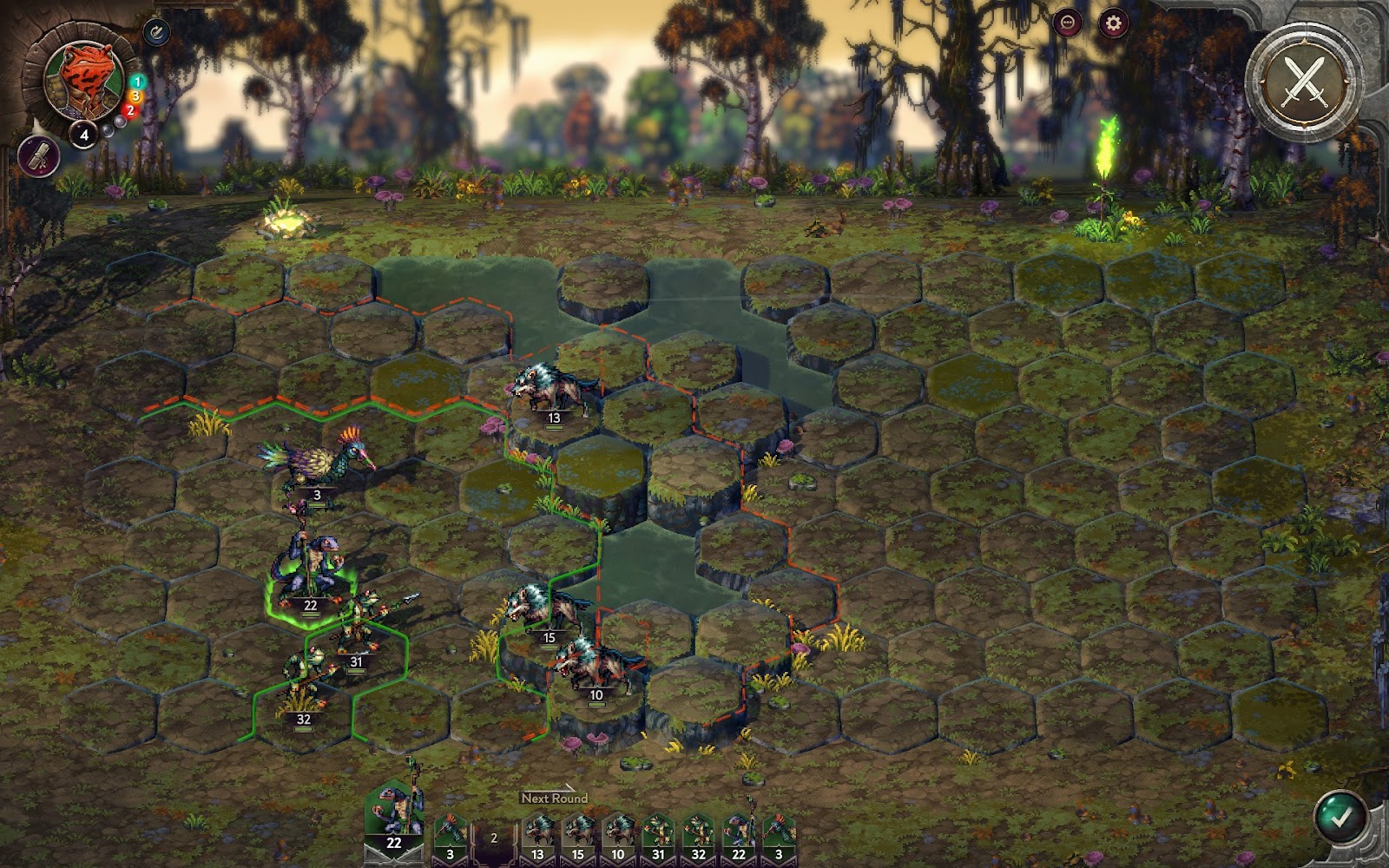
But the absolute biggest change a Heroes fan will notice is the addition of caps on stack size, as well as unit slots being tied to a Wielder skill. You only start with four open slots, and must level your Command skill to get more. As for a “cap on stack size,” you may start off only being able to field, say, 40 Swordsmen in a single stack. Want more than that? You either need to pay for expensive research to increase the cap specifically for Swordsmen, or use another army slot for an additional stack.
This is a radical departure from the Heroes norm of 1500 skeletons being only a single stack: and it’s actually a good change for the genre, though it comes at the price of fights feeling more intimate than epic. With a cap on units per stack that varies depending on unit tier, you’re presented with strategic questions that don’t have obvious answers. Is 20 Knights or 80 Militia more valuable? In Songs, the answer can actually be “it depends.”
I also really enjoy the implementation of the Scouting stat (and corresponding Skill), even if it’s never actually explained. Scouting is actually quite useful in Songs beyond simply seeing further or getting exact numerical readouts of each type of unit in a stack: With a high enough value, you’re able to see the deployment of enemy units before combat begins. Since you’re allowed to deploy your units on a simplified map before combat begins by default, this information can lead to major advantages.
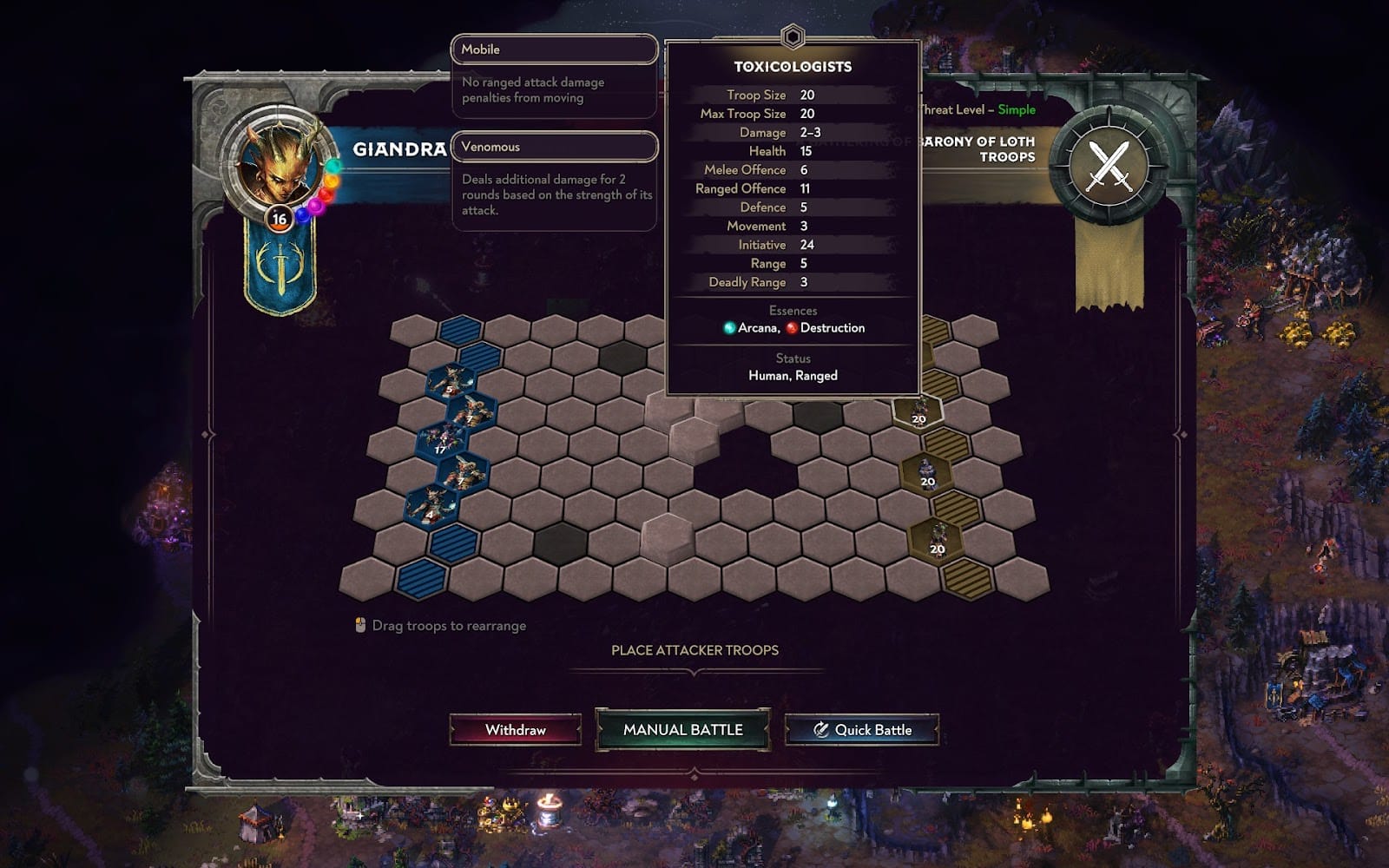
Before we move on from the nuts and bolts of combat, here are a few notes on the combat interface: overall, it’s quite good, providing nearly all the information you could want immediately intuitively. When it comes to UX reviewers are often quick to point out the bad and slow to point out the good, so I feel it’s necessary to give credit where credit is due.
However, there are a couple missed opportunities. First, there’s no retaliation report. Songs is great about showing you exactly how much damage your stack will deal and explaining where that number came from, but won’t tell you how much damage and how many losses you can expect when the enemy retaliates.
Second, there is no means of retrying a combat short of manually reloading a save. Quick Combat offers an opportunity to retry the combat manually, but there’s no equivalent simple way to retry a manual combat. This is an increasingly common feature in tactical combat-heavy games, so I hope to see it in Songs in the near future.
Do You Believe in Magic?
Magic in Songs is innovative and unusual, which I applaud. To sum it up as simply as possible, your Wielder gently squeezes a unit at the start of its turn and collects its delicious magic juice known as “essence.” Essence comes in five different flavors, including classics like Destruction and Chaos or future favorites like Arcane. It also comes in Tropical Skittles colors, which is delightful.
Your Wielder steadily collects a stash of essence over combat, then – you see where this is going – spends it to cast spells from the various schools. In general stronger spells cost more, but given how situational each spell is (and how it scales with Wielder skills), power has much more to do with circumstances than cost. The strongest spells – on paper at least – are hybrid spells, requiring essence of two different colors to cast.
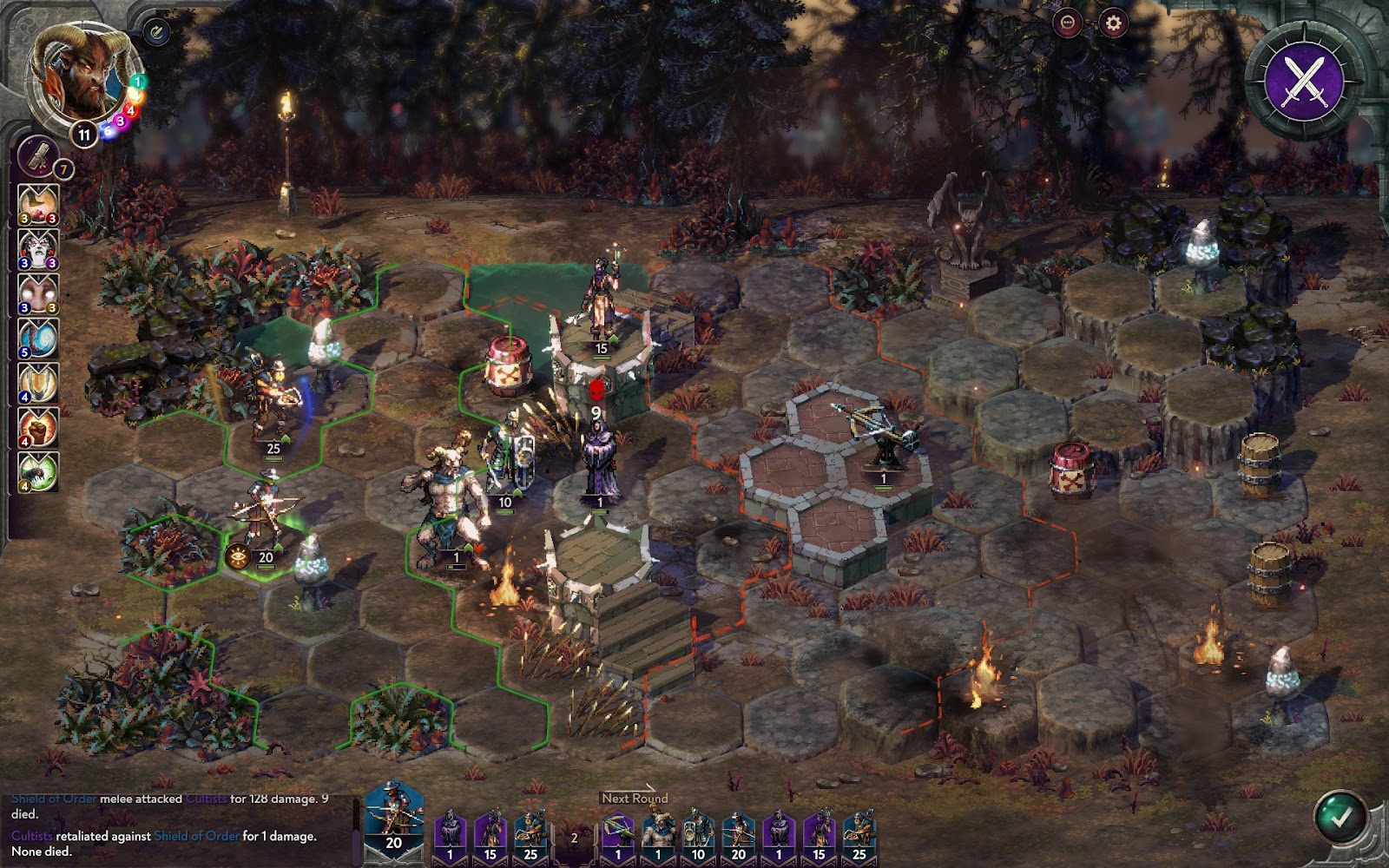
“So it’s mana,” says you. “How is this innovative?” First, the amount and colors of essence units generate vary greatly even within a single faction. Second, stronger units don’t always generate more essence. Third, and most importantly, a Wielder only has a limited number of unit slots.
In general, the Heroes strategy of “take the statistically best units” typically results in an inflexible and shallow essence pool – maybe enough to throw a spell or two per round (though Wielder skills, artifacts, research, and map objects can all increase essence generated per full combat round). Support units weak in direct combat, such as the faction-unique musical units, tend to generate much more.
Additionally, in a huge departure for Heroes vets who are used to a maximum of one spell per full combat round, in Songs you can cast multiple spells in a single unit turn – and many will happily stack their effects. Plus, a skilled caster will cast many single-target spells multiple times for the same essence cost, allowing you to apply the effect around to multiple targets, or multiply the effect on a single target.
There’s a rather big learning curve to all this, due in no small part to all spells being accessible immediately – which is to say, there is no spell research. The number of options the magic system initially presents is daunting. A Wielder with advanced magical skills is not as obviously strong as an advanced unit-oriented Wielder is, and the path to making a magic-focused Wielder strong is rarely the obvious one.
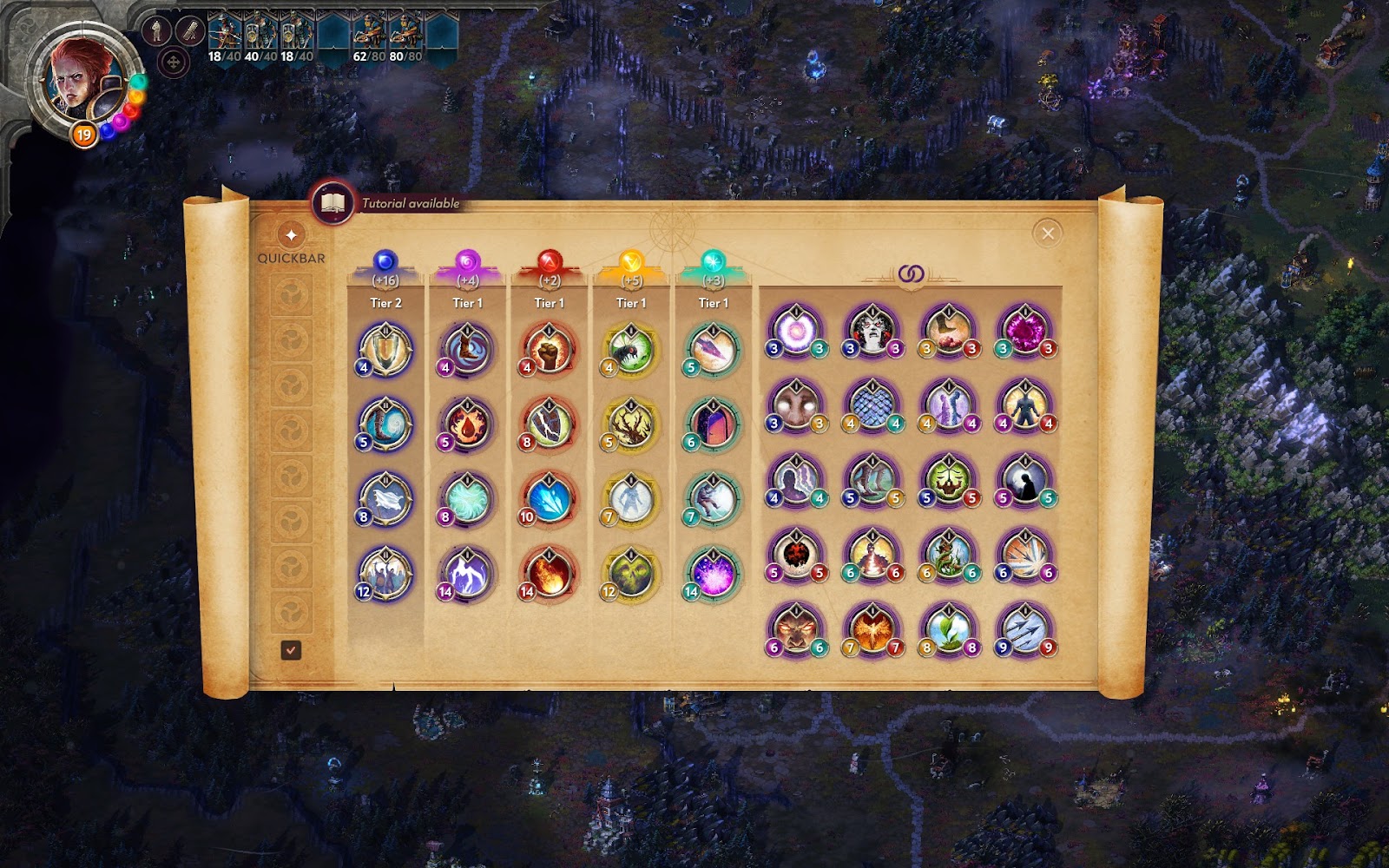
On the other hand, things like giving your units more stats or traveling further on the world map has little room for a “wrong” choice. You’ll never be poring over spell combos, or doing the math to know how much essence of each type you’ll have by your next round, or how many stacks of +10 Defense you should give a unit (and what that will mean).
This is another case of Songs coming up with a system in direct response to problems Heroes had – in this case, with the balance around magic. The result isn’t bad, and it does fix several of those old sticking points. I’m just not convinced it’s more fun.
We Built This City
Towns (and Settlements) are the backbone of your economy and military in Songs unless a map is hand-made to change that general rule. Town locations are predefined – no new towns may be built and towns cannot ever be fully razed. Thus, economically, Songs is a zero-sum game. Towns can be upgraded a few times however, which adds more building slots and additional base gold income.
Each town comes in three different sizes: Small Settlement, Large Settlement, and the full-sized town, whose starting level is called a “Camp.” The difference between each comes down to the maximum number of available building slots: Small Settlements have up to 1 Medium and 2 Small slots, Medium Settlements have up to 1 Large, 2 Medium, and 3 Small slots, and Camps have up to 2 Large, 3 Medium, and a whopping 7 Small, plus the option to build huge walls around the entire town which block movement on the map.
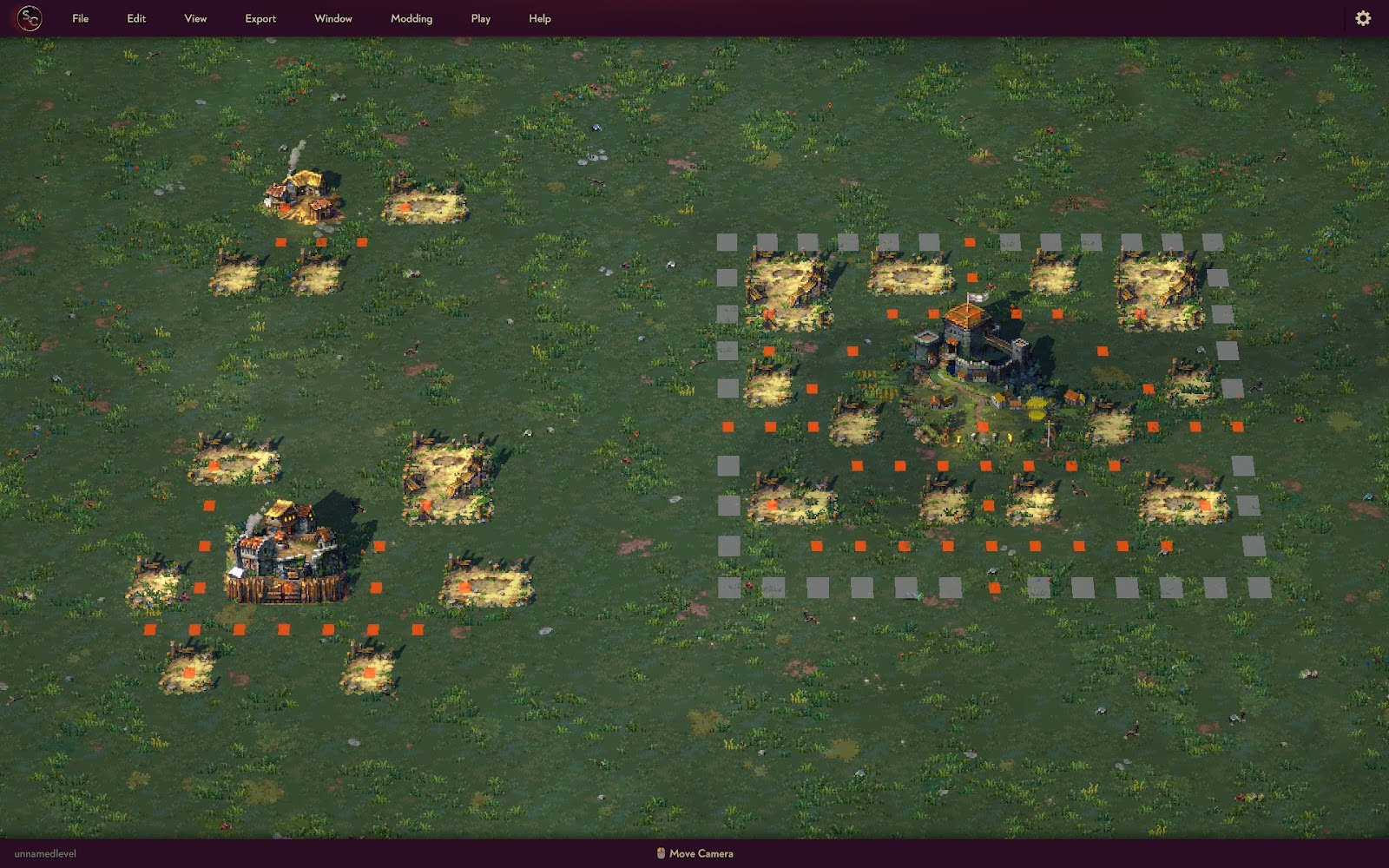
Though it varies between factions, the type of buildings available for each slot generally follows a similar pattern: Small slots have the widest diversity of choices, including low-end unit production, extra income, and utility such as watch towers or structures which lets you hire units from any city in one location. Medium slots contain either mid to high-end unit production, or the ever-valuable Marketplace, which swaps one resource for another. The more Marketplaces you have, the better the exchange rates, capping at 5 Marketplaces across your kingdom. Finally, the Large slots contain top-end unit recruitment or research buildings, divided into unit upgrades and more general or economic upgrades.
Of course, not everything is so cut and dry. Certain mid-tier buildings may require specific small buildings – for instance, the Knight-producing Castle requires the Militia-producing Peasant Hut. Or, upgrading units may require a specific building: for instance, upgrading the medium Barracks Archer unit requires a small Lumber Mill to be present.
Buildings are often situational: you’ll often find yourself maintaining utility buildings in Small Settlements on the front lines (Scout Tower, Rally Point), but once the line moves up and the once-frontier town turns into a sleepy town in the heart of your kingdom, it may be wise to rip down the old utility and replace it with two farms for gold and a Marketplace for better trade rates. While there’s not much to building out towns in Songs, swapping out defensive structures for farms does come with a certain sense of satisfaction, as if you’re making real progress.

On the other hand, I’m not a big fan of the Research system in Songs. While the purpose is presumably to facilitate keeping stack sizes relatively small and individual units in a stack more valuable, in practice it feels more like a tax and a resource sink. The research is definitely impactful; it just doesn’t feel impactful or satisfying. You’re doing it because you have to since your opponent did it (tax) and because there’s nothing better to spend your gold on anyway (resource sink). It feels very game-y.
Augusting Everything After
Before we wrap it up, let’s talk technical stuff: graphics, performance, sound, all those tangibles.
Graphics are a mixed bag. Not in terms of quality – everything is well-done and pretty – but in terms of readability. Take this, for instance:
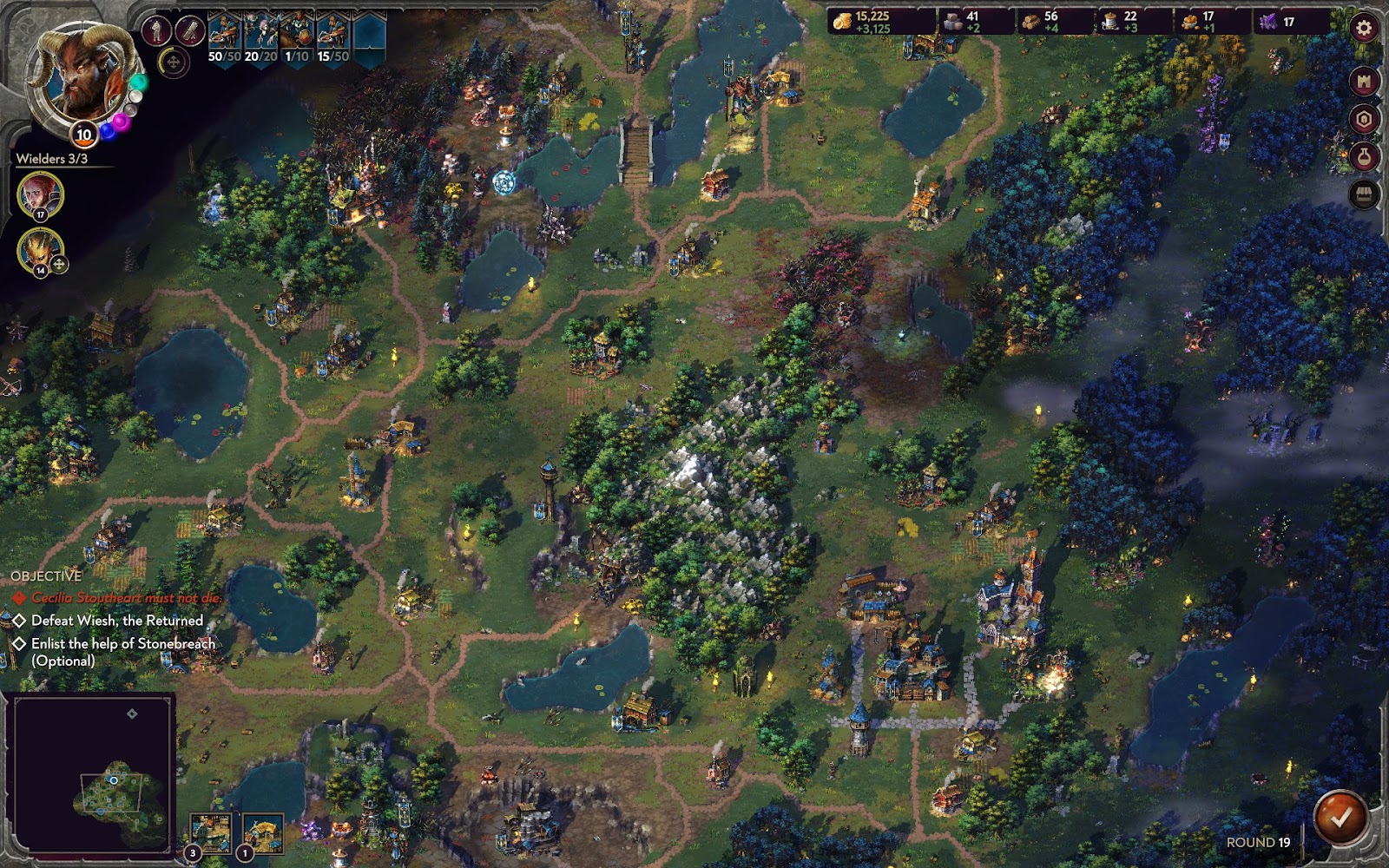
If you’re like me, you’ll immediately spot the cobblestone roads of a Large Settlement and the shiny ball-looking object (a rare Artifact Shield), but can you spot the pickups of Wood I missed? How many? Can you spot the two Small Settlements, seven(?) capturable farms, two resource mines, three Wielders, and four “Dwellings” (spots outside of a city where you can recruit one type of unit)?
To me, the buildings almost all look the same. I can barely make out my little blue flag marking captured sites because, wouldn’t you know it, the roofs of structures I’ve captured or built – and the water – are the same color. Of course you usually won’t be playing at such a zoomed out level, but the problem is it’s not much better when you’re zoomed in and panning around: the difference between a Peasant dwelling, a Farm, and a Small Settlement is pretty damn hard to remember if they’re not all next to each other. In my brain they’re all boxy, some combination of white, yellow, brown, and blue, and planted firmly on a background of terrain that’s green, yellow-green, and blue.
Songs has tools for reviewing all buildings you’ve flagged (and built) which is quite welcome, but unfortunately there’s no option to see things you’ve revealed, but haven’t flagged. You do have the Alt key to show a tag on all interactive map objects…
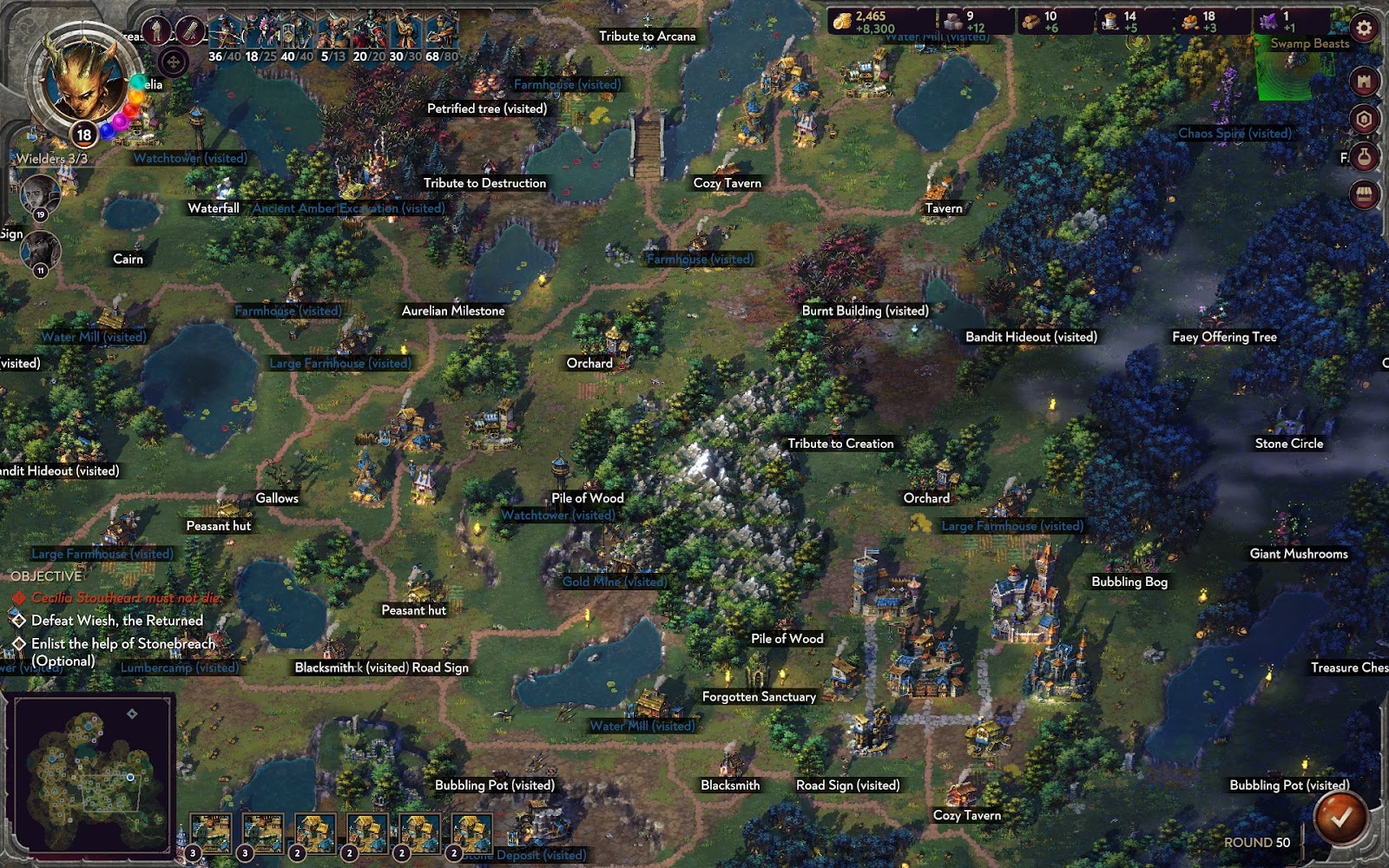
…but once again, it’s dubiously useful when zoomed out. At least claimed sites are marked with player color, but both unclaimed and visited sites are lost in the “everything else” white.
That caption was supposed to be a joke, but now that I think about it, a “loot” filter might be exactly what Songs needs.
On a positive note, combat has no readability problems, save maybe for a couple of the Loth (Undead) faction units, which are both just “guys in purple robes.” Plus, the Street Fighter style last hit effect, complete with an awkwardly long transition through a few sprites of animation, is delightful. And you can turn it off if you hate it!
Fortunately, especially for a game named Songs of Conquest, the music is pretty good. I can’t say any of the tunes have really stuck with me or grabbed me, but they’ve all been enjoyable without getting old and repetitive.
And for all the Steam Deck enjoyers out there: Songs is verified, has a controller interface, and runs great on it!
For the few here for a story, the writing and narrative are… present. Don’t expect to be amazed by the factions: there’s the omnipresent vanilla archers-and-knights blue faction, the evil purple spooky skeleton faction, the green-because-they’re-frogs faction, and the orange and yellow because they live in a desert you see, also they have a guns faction. Don’t think too hard about it; what’s important is that they’re sufficiently different in combat.
You Can’t Go HOMM Again
Heroes 3 is in no danger of being usurped. We all knew it never really was: nostalgia is fueled by that which tries to supplant it. But Songs of Conquest doesn’t need to usurp anything to be a good game.
Ultimately, my recommendation comes down to you as a player. If you’re a 4x or general strategy fan who’s never given this subgenre a shot, there’s not the slightest shadow of a doubt in my mind: I’d send you straight to the source with the Heroes games. They’re as close to timeless as you can get, especially with mods.
But if you’ve played Heroes, liked it, and miss the subgenre, I’d recommend Songs of Conquest in the same breath as the excellent King’s Bounty: Crossworlds. Both are worthy successors that provide two different ideas about where this subgenre could go moving forward. Check it out!