Last year I wrote an article encouraging 4X companies to expand their designs in certain areas. It’s too soon to tell if that article had any impact, but it’s not too soon to ask for more!
Starting Conditions
I’d like to start in an obvious place: Starting Conditions. In classic 4X design, the player (note that any time I say “player” in this piece, I am also including the AI) starts out with one city or one planet and then expands from there. Why though? I understand it’s a compelling story to work your way up from almost nothing into a massive empire, but once you’ve lived that story a few times, wouldn’t it be nice to try something else?
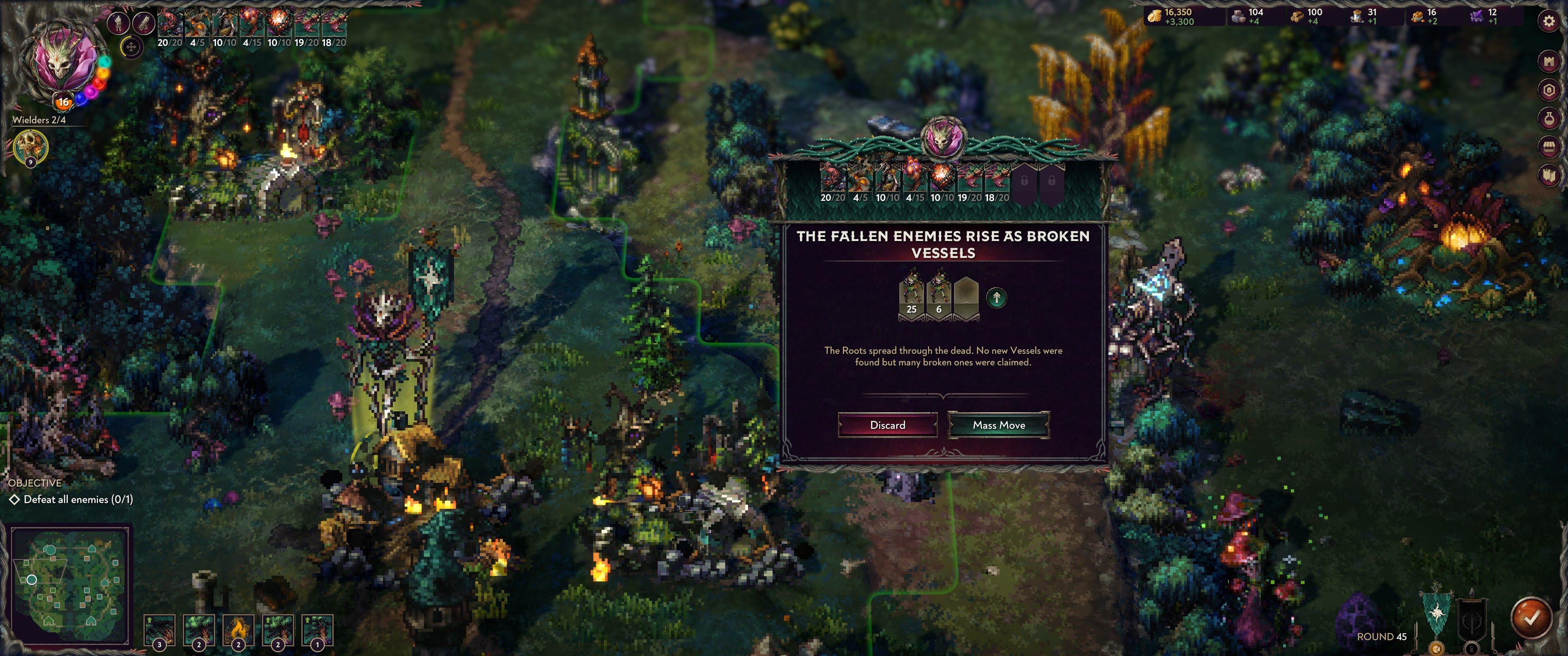
Companies could easily allow players to start with 3, 5, 7, or however many cities they want (depending on map size). This would pose all kinds of neat new problems for players to solve and get past the early game routine that some people don’t like as much. I think starting as an already established kingdom/federation is a fun prospect, especially for players with busy lives who are shorter on time. My experience tells me that the 4X audience does tend to be a little bit older than other game genres like FPS or RTS, so maybe this would be a way to better appeal to that demographic.
Some might argue that any 4X game that starts with more than one city is actually a Grand Strategy game. I don’t agree with that. “4X has always had games that start with one city or planet because it always has,” I’m told. That’s circular logic, and I believe that 4X and Grand Strategy have something to teach one another. Besides that, the most classic of all 4X games, Master of Orion 2, allowed players to start with multiple colonies using the “Advanced“ start option. As our genre develops, it’s natural that it takes on the attributes of others. 4X has already adopted many RPG elements, for instance, such as experience points, leveling, mana systems, and so on. Taking something from grand strategy- especially as an option- shouldn’t be all that controversial.
Speaking of starting cities/planets, I think there could be some innovation here, too. How about a dial that lets you control how many starting buildings, population units (pops), military units/vessels, resources, and so on? For some games, this wouldn’t always work. Endless Legend for instance makes you research most of your buildings, but games like Age of Wonders III and Planar Conquest have all sorts of beginning buildings a city could have at the start. Conversely, a player could dial it down to nothing in order to increase the difficulty, as many are wont to do.
Finally, I’d like to see games implement a way to easily re-randomize the starting terrain/system around a player’s starting city/planet. Some games have this already like the very obscure (and poorly received) Apollo4X. One of the things I actually loved about that game was how easy it was to re-randomize all the planets if you didn’t like the configuration the game came up with. It was a great innovation. Other games should implement this. How many times have you restarted a 4X game when you realized your starting position sucked? I know it’s scummy, but we’ve all done it! A game like Thea: The Awakening could REALLY benefit from that little design nugget. And it’s not like the game would need to regenerate the whole map, just the city’s surrounding tiles. That would be fairly easy to implement, I would think.
The Endgame
I touched on victory conditions last time and I’m going to do that again, as well as discuss the endgame as a whole. First, let’s get victory conditions out of the way. I like the idea of having multiple victory conditions from a design standpoint because it keeps the end in doubt. We all know that snowballing and steamrolling are a problem, and multiple ways to win can help mitigate those issues. If you’re not sure why more than one wincon is good, READ THIS as an example. I think most people feel that players should at least have more than one path to a win.

Instead of listing different types of victories design companies could use, I’m going to give some general guidance on how many and what types of victories games might need. 4X games have a lot of subsystems: diplomacy, research, questing, combat, etc. Different people find different subsystems more interesting. I would submit that each major subsystem should have its own victory condition. If you have a diplomatic system, you should have a diplomatic victory. If you have a quest system, you should have a quest victory. Of course, each victory needs an on/off switch in the options so that players can customize their experience or focus on the types of victory they enjoy most. That’s just as important as including multiple wincons to begin with.
There are also ways to make the endgame more engaging. As mentioned, snowballing – when every win (like taking control of a city, planet, etc.) makes the next win easier to achieve – is a real problem. So why not add a “Desperation” mechanic that boosts productivity from pops for a few turns after each city/planet is lost? Players can get new buildings and military units finished faster and maybe add to their gold or mana stockpiles in order to be in a stronger position to take back their possessions.
The boost from Desperation would be directly proportional to the number of cities lost from the player’s max, so the more cities he/she has lost, the greater the bonus. That would mean that by the time you’re down to your last one, your production and bonuses would be off the charts. It would certainly make taking that last settlement far more interesting in my mind.
Another way to add tension to the endgame is through triggered events. The Antarans from Master of Orion 2 are a good example, as are Distant Worlds’ and Polaris Sector’s endgame threats. Stellaris has something similar, although the current execution might not be the greatest. Anyway, triggered events that add a new danger, resource, difficulty, building, super-technology, or win condition to the game as it appears to be drawing to a close would change the whole dynamic of play. Players would suddenly have to adapt to a whole new environment and maybe even have to pursue a different strategy for victory. As with all these types of suggestions, there would need to be an off switch for it in game setup. There are players out there who just want the game to proceed along predictably, and in some ways, I don’t blame them.
Thematic Content
If you haven’t read my Sorcerer King vs. Thea: the Awakening article yet, I would encourage you to do so. This section assumes you have. I just want to reinforce the idea that many modern players want more out of their 4X games than just strategic and tactical considerations. Plenty of us want to get to know the world and the lore behind the people and places they see.

I think EL started this in the more recent crop of 4X games with its compelling factions and faction quests. That was a great place to begin, but one problem I have with the game is that I don’t know where I (as the player) fit in. Am I the collective consciousness of the people? Am I God? There is no Ghandi or Rjak-type character for me to be.
I think Thea, SK, and Stellaris have also shown that one of the primary selling points for a 4X game can be its storyline. Still, there’s room for improvement. In Thea, I choose a deity, but I don’t get the sense I’m portraying that deity during play. SK doesn’t give me enough of a world to interact with even though I totally love the basic situation in that game. Stellaris promises emergent thematic play, but the still-in-development diplomacy system really hamstrings unexpected story generation.

Games with narrative/thematic elements give players more context to the conflicts as they play out. That context makes the players feel like their decisions are more consequential and important. Nothing, in my opinion, sucks more in a 4X game than the feeling that your decisions don’t have an impact on the results. Developing the theme and lore of a game goes a long way in making sure those feelings don’t creep up on the player.
Licensing
Of all the things I’ll suggest in this article, licensing is potentially the most dangerous. 4X is one of the few video game genres with little to no licensing at all. It’s kind of amazing when you think about it. The RTS genre really started off with Dune. FPS and RPGs license almost anything. Electronic card games license real-world card games like Pokémon or other intellectual properties (IP) within the company like Hearthstone. And there are hardly any sports games out there at all that don’t license something (notable exception: Rocket League).
So what’s up with 4X? Why don’t we have any licenses? Well, for one thing, 4X games don’t make a lot of money. If “Civilization” isn’t in your title, you’re going to sell fewer than a million units. That’s not enough to entice a lot of IP holders and probably not enough to even pay for the really big licenses that might be able to carry a title on their own. And a license gamble that doesn’t pay off usually ends in bankruptcy (see THQ). However, that won’t stop me from asking!

I think some really great 4X games could be made out of the following IPs:
- Star Wars
- Game Of Thrones
- Deadlands
- Star Trek TNG/DS9 Era
- Battletech (Clan War era ~ 3060)
- Dungeons and Dragons: Birthright
- Babylon 5
- Mad Max
- Magic: The Gathering
Try telling me that some of those titles don’t get your creative juices flowing. Battletech especially piques my interest. Blowing up mechs is always cool and doing that in a turn-based strategy game with EL empire management and AoW3-styled battleboards sounds sweet!
[Side note: there is a 4X game based on Star Wars available on GOG called Star Wars: Rebellion]
Small Items
I have a whole list of small things I’d like to see invented or incorporated into modern 4X games. I’ll just briefly go through them:
Subterfuge
A lot of games have espionage (EL, Master of Orion: Conquer the Stars), but not too many games have what I call subterfuge. Subterfuge, for the purposes of this article, is being able to insert units into key strategic places unseen by other players. For instance, being able to hide a ship from the AI’s view in a nebula or hide a stack of ranger units in a forest. Subterfuge also includes setting traps. Players could place something invisible to others that damages or kills units as they move through that tile. Alternatively, why not have cloaking technology that could hide a starbase or camouflaged totems that foment unrest in a nearby enemy city? Increasing the number of ways players can interact with the game world is an excellent way to bring that world alive and make the player feel like he or she has many varied and viable actions to take in order to achieve his or her goals.

Enhanced Questing
Thea has one of the best questing systems I’ve ever seen in a 4X style game. It takes what EL and SK did and moves it to the next level. Other games should follow suit. However, I’d like to see questing taken to an even higher place. Thea’s quests involve many compelling storylines and factions, but once the quest is done, there’s no permanent effect left on the world. An enhanced questing system would have the depth of Thea, but also change the course of future events based on the player’s choices. Work together with the orc tribe to defeat a common foe? From then on, the orcs will be able to expand their empire but also have friendly dealings with you in the future. But in another game, let’s say you screw over those orcs. Then other orc tribes relentlessly assault you because of a blood oath they took to avenge their brothers and sisters. That certainly sounds like a fun game to play, right?

Customizable GUI Elements
One of the big bugaboos of video game design is tooltips. Any game that doesn’t launch with them is rightfully lambasted for it, and even games that do have lots of them are still met with complaints that there aren’t enough. However, after a while, these tooltips just get in the way. Once you learn where the diplomacy button is, do you really need the tooltip anymore? Tooltips and help screens should have a toggle between Beginner, Veteran, Expert, and Off. For beginners, tooltips would pop up EVERYWHERE and very quickly – even tooltips for basic things like “Close” when the cursor mouse-overs the X on a panel. For a Veteran, the delay on tooltips would be increased and some of the more obvious tooltips would be eliminated. For Experts, tooltips would have an even longer delay and they’d be gone altogether on the main screen. And then obviously Off would eliminate them altogether, giving players a clean interface to use once they are totally comfortable with the game. The same ideas could be applied to help screens and info boxes as well.
End 1UPT
I cannot stand one-unit-per-tile! I know there are people out there that love it, but it messes with the AI, clutters the map, and increases the amount of scrolling I have to do. Civilization V brought the mechanic into the mainstream and it is certainly the most high profile game to use it. Thankfully, though, Civ VI is said to be modifying that somewhat. I think AoW 3’s limited stack sizes is an ideal middle ground. You don’t have to manage huge numbers of units, but you can also use the map more strategically. I hope other 4X game designers follow suit.
Automation
Distant Worlds: Universe is the undisputed king of automation in 4X games. Stellaris took a stab at it with Sectors, but for the most part, 4X games don’t offer too many systems for helping players more easily manage the ever-growing complex list of systems and subsystems in games. 4X games need better auto-scouting mechanics, better auto-settling mechanics, ways to carve up an empire into smaller, more manageable chunks, better unit design and deployment systems that automatically address needs in an empire, and finally, smart build queues that automatically update when a tech is unlocked or resource discovered.

Dynamic Loot
4X games need to get smarter. Almost all of them have some type of “goodie hut” mechanic that gives the player random loot. Why random, though? I guess if it’s random enough, sooner or later the player will get something useful, but it doesn’t need to be that way. How much extra coding would it take to have the computer look at a player’s current resource levels and then modify the loot table based on that?
Take EL for example. Late in the game, there’s a tech that lets you reset all the goodie huts so you can explore them again. When the player goes back to do that, the game shouldn’t just hand out random crap. It should look at the FIDSI and as well as the strategic and luxury resources and provide rewards based on what the player needs most. Need a few more emeralds to activate that resource? The next goodie hut has a higher chance of giving them to you. Low on dust? The next goodie hut will have a higher likelihood of awarding that to you. It’s always been smart to loot goodie huts, but now that smart play takes on even more importance as the player understands that there’s a great chance he or she will get something crucial. Imagine how this might affect multiplayer. The rewards would also need to scale depending upon when they are found. In the early game, finding a few dozen units of something is great, but by the mid to late game, you’re going to need many times more to make a difference. A good dynamic loot algorithm would take that into account. The race to explore would be of even greater importance and provide the combatants another arena in which they can compete.
Non-Fascist Governments
Most games pay lip service to government types if they address it at all. Even Civ games, whenever you can choose government types, don’t really restrict the player from just doing whatever. Stellaris took a nice stab at making a faction’s dispositions and governmental organization matter, but it’s time to take it to an even deeper level. Stellaris’s bonuses and modifiers are just too small to be felt, and the real in-game consequences are only mildly play-altering. The players need feel the difference.

Most games offer a dictatorial or fascist set up, thanks to our genre’s forefather games like MoO and Master of Magic. One of the few recent games that has a totally different societal structure is Thea. That game introduces the player to a collectivist society where there is no real strongman in charge of the government. That’s a refreshing difference. More games should explore different ideas when it comes to government and society in ways that are more than just window dressing. Part of the fun of strategy games is learning to adapt to new and difficult situations. Mastering the ins and outs of a republic or dealing with strong personalities in an oligarchic government can be part of the fun in a 4X – more than just choosing whatever government type gives you the biggest bonus to production or starship lasers.
Conclusion
Just as before, the purpose of this article is mainly to spark innovation and conversation. The ideas suggested here are merely a sampling of brilliant design gems I’ve come across over the years. I’m sure our gifted community has plenty to add. I believe that 4X is ready to evolve into the next level. There is hope that in the near future, more 4X games, other than the Civilization franchise, will reach mass audiences. By pushing the innovation envelope, we just might get there.