Introduction:
There has been no shortage of Zephon coverage here at eXplorminate, such as a preview, interview and podcast, but no actual “review.”
So, welcome Aurumlamina with our, slightly late, review.
Please note, no AI was used in making this review.

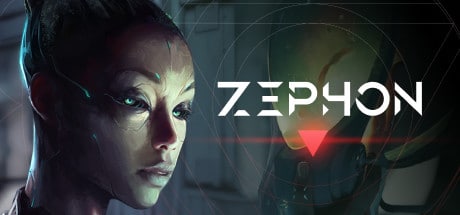
We’re in a strong position when it comes to strategy gaming currently. Whether you are a 4Xer, a Grand Strategy enthusiast, a Tactical RPG fanatic, or anything in between or outside, there are plenty of exceptional titles to choose from. As an all-of-the-above strategy gamer, I cycle through a handful of perma-installed titles that I can jump into at any moment and lose myself in for hours (or, you know, weeks, if we’re being honest). After a few games, I can now proudly hold ZEPHON up as a candidate with a lot of potential for making it onto that lineup.
ZEPHON is a 4X war game developed by Proxy Studios, the same studio that brought us Warhammer 40,000: Gladius – Relics of War. It’s clear that they’ve brought much of what they learned from designing Gladius and adapted it to a setting that is all their own while combining themes of the post-apocalyptic, the eldritch, and cyberpunk. So let’s get into it!
Not Quite the Jetsons
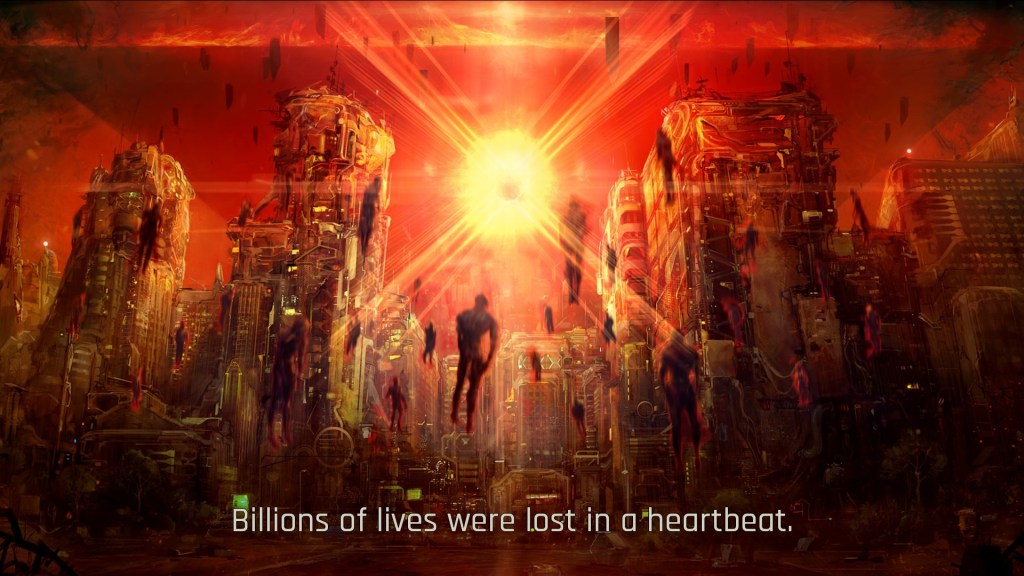
If you’re looking for a bright future that gives you the warm fuzzies, ZEPHON is most definitely not for you. In this post-apocalyptic setting, the world has been ravaged by war and humanity was barely a contender in it. An overwhelming alien invasion was thwarted by a world-spanning, rogue AI that determined that only it knew how to preserve the world as we knew it. The cost was astronomical even considering that the humans had been defeated almost instantaneously by the invaders.
The setting is what really stands out for me with ZEPHON. The gameplay itself is a blast, but the world itself is incredibly immersive with plenty of details to discover. Technologies, units, and events all offer up a lot of information to expand upon what you see in front of you. I frequently found myself excited to learn more when I encountered a new grotesque monstrosity of either eldritch or cyber origin. It’s impressive when a game can get you that invested in its setting so quickly.
Guns, Whispers, and Silicon
As stated earlier, ZEPHON is developed by the crew that brought us Warhammer 40,000: Gladius – Relics of War. If you’ve spent any time with that title, it’s a great starting point to understand what’s on offer here as ZEPHON feels almost like a sequel feature-wise.
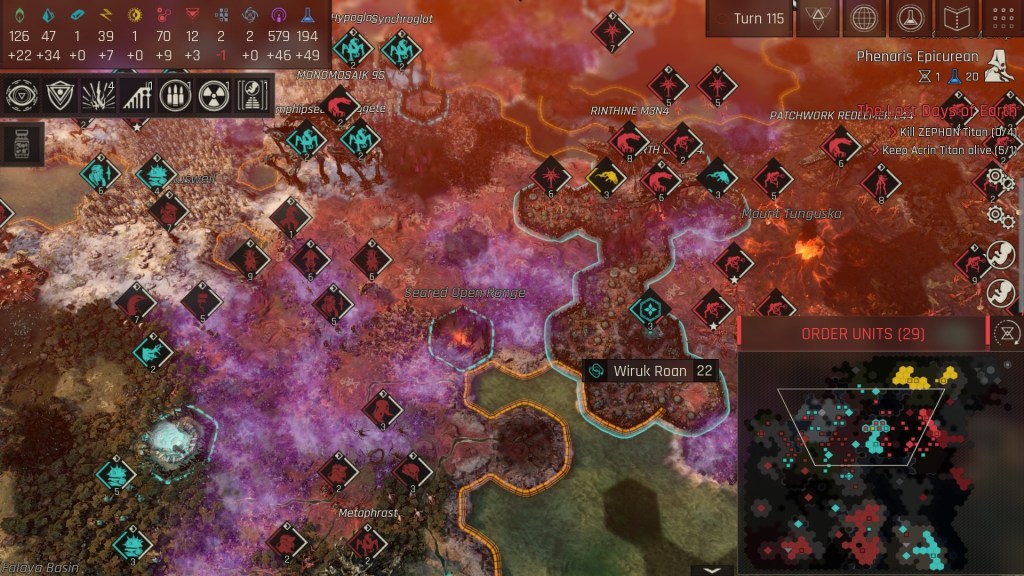
As is often the case in the 4X-sphere, the city is the central aspect of your domain. They are exclusively acquired by founding them with engineers as there is no conquest of other factions’ cities, only scorched earth razing. A settlement expands through acquiring new tiles from within its build menu and each of these tiles allows the construction of buildings on them. It is these buildings that your population is assigned to in order to harvest resources and refine advanced ones, produce your military units, and officially claim your territory. Every building requires a point of population to operate it and this is the primary limiting factor when it comes to your productivity. They don’t shatter any boundaries or expectations in the way that they function, but they do work well enough in serving as the foundational support of your faction.

On the other hand, outposts are tiles on the map that are designated as something other than terrain or anomalies. These are locations like flesh trees (trees made of mystery meat – yum), alien crash sites, watchtowers, and so on. These can be claimed by a unit with their income added into your economy, though these bonuses are often doubled if your expansion incorporates them into one of your cities. Outposts are a solid addition as they create valuable strategic objectives worth fighting over rather than simply expanding toward or dismissing entirely if a foe has taken them first.
Terrain itself also plays an important role in shaping both expansion and warfare. Cliffs, oceans, and other obstacles create natural boundaries that can funnel armies into predictable avenues of approach or protect vulnerable territory from attack. Individual tiles also carry modifiers that affect resource production, making the quality of the land just as important as the quantity of it when deciding where to expand. Navigating unknown terrain is a terrifying experience as moving into the line-of-sight of a hostile unit before discovering them often grants them a free attack. These attacks can be devastating, making reconnaissance units worth their weight in gold, chips, algae, or whatever your preferred currency happens to be. Scout first, whenever possible.
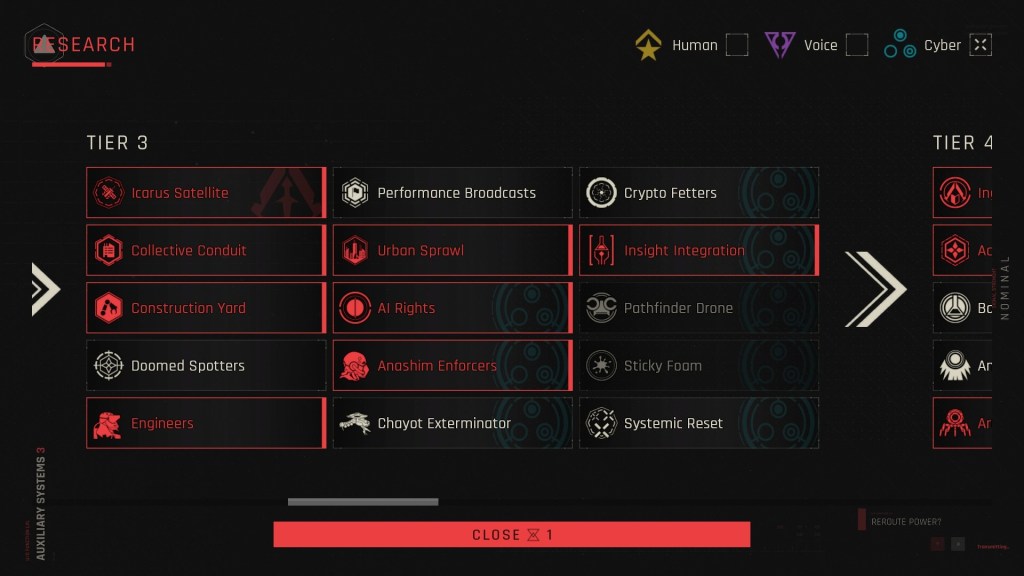
Units come in a wide variety of shapes, sizes, and capabilities. Infantry, vehicles, air, and even plenty of monstrous abominations make their way onto the roster and each has its own identity. The tech tree is much wider in ZEPHON than it is in Gladius, giving each faction greater flexibility in how it develops over the course of a campaign. Whereas Gladius provides a smaller, focused tech tree that is unique for each faction, ZEPHON’s tree is universal, with your chosen leader adding an exclusive tech of their own to each tier. However, a good portion of these techs are aligned with one of the three affinities (Human, Voice, or Cyber), though you can freely take them if you so choose. We’ll discuss affinities and leaders in more detail in a later section. Mechanically, combat doesn’t differ much from what you expect in the genre, though each of the affinities feels vastly different from one another and offer their own strengths, weaknesses, and unit rosters. I never found combat to become repetitive in the way that it can in many titles which is a good thing as once your wars kick off you rarely find peace and quiet again. I never had a lull after I’d made first contact, which comes relatively quickly, and the standard game length runs quickly enough that you run through all four of the X’s before anything gets dry.

Diplomacy is fairly simplistic, but impactful and works well for the title. Unlike many of its 4X cousins, ZEPHON’s default diplomatic state with other factions is war. Even if you end up settling on peace, establishing a trade agreement, and forming an alliance as the game progresses, first contact will likely involve the two of you at each other’s throats with some ammunition haphazardly tossed around. Being able to win as an alliance that formed in-game is also a nice touch and one that I’m happy to see becoming increasingly mainstream. It feels more natural and enjoyable, especially in multiplayer, to build toward that as opposed to just starting off on assigned teams which often messes with the game mechanics in some way. I was pretty hyped when I saw that each of the leaders has their own thematic dialogue lines for diplomatic actions that give us a deeper glimpse into what makes them tick.
Victory itself is what truly seals ZEPHON in as a war game. There are only two victories: eliminate all non-allied rival factions or survive the crisis event that triggers in the late-game. The military victory holds no surprises for anyone, but the alternative, where the overwhelmingly powerful AI known as ZEPHON (sound familiar?) activates its most powerful tools to face off against a second full-force alien invasion is certainly an unexpected touch. You can either side with one of these factions or go all-in on establishing your dominance and decide that you are the third superpower and face off against both of them. It’s also nice to see that all of the story choices that you made along the way come back if you made it to this phase and they offer some interesting benefits.
The Poor Souls (and Circuits) That Inhabit This Place
The leaders of ZEPHON are a collection of interesting characters with traits that significantly impact their faction’s strengths and weaknesses. These traits influence everything from unit performance and city development to diplomatic relations. While one leader has traits which include making all of his units regenerate health each turn but making them more expensive, another has one that results in less loyalty penalties for the number of cities held, a third can transform defeated foes into monstrosities, and a fourth can move their units after taking an action which is usually not possible. There’s plenty of variety and you can feel a difference between factions even when they share a preferred affinity.
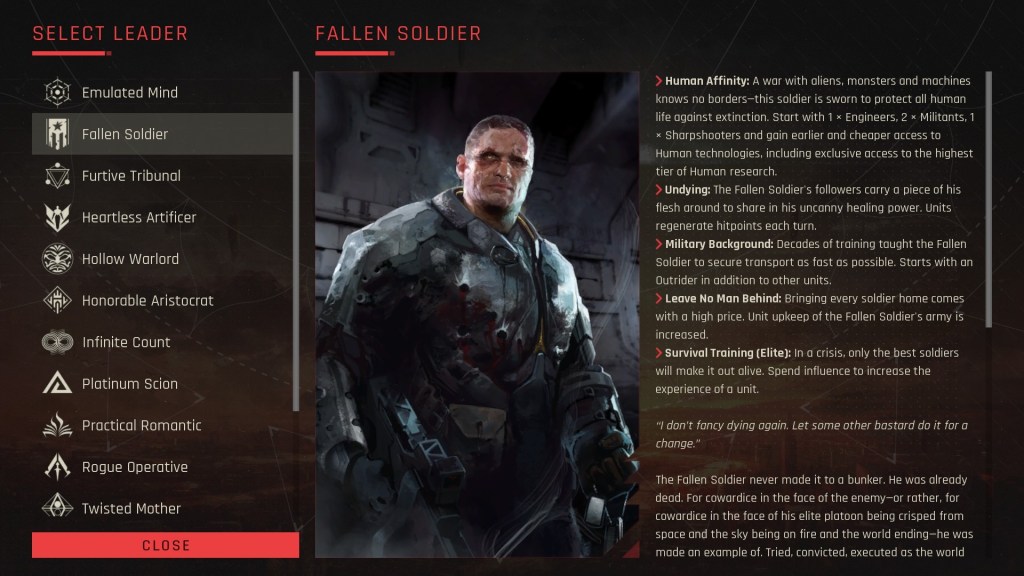
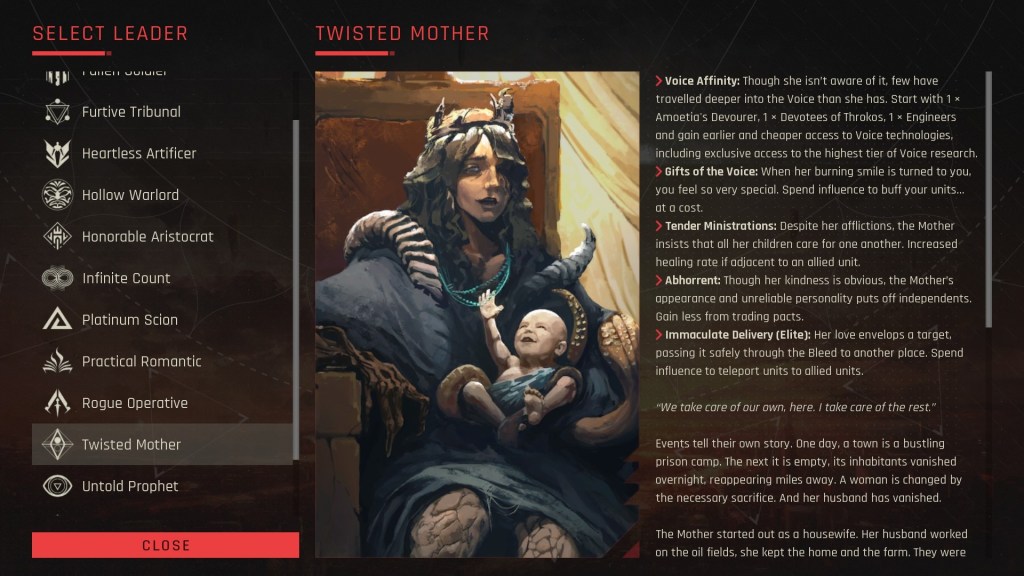
Speaking of affinities, each leader also has a predisposition to one: Human, Cyber, or Voice. As might be expected, Human is the most conventional affinity, fielding futuristic soldiers, tanks, artillery, mechs, and so on. Cyber is a horror-drenched vision of what you might envision when you hear ‘cyberpunk’. Their units are often capable of dealing serious damage but are generally more vulnerable to damage than the humans. The Voice on the other hand, are twisted, biological horrors that often have a selection of odd abilities that make their Lovecraftian-style origins stand out. It’s important to note that even as each faction has a preference for one of these which grants certain techs earlier and top-tier ones, you can mix-and-match across the tech trees, playing as a purist Human on one game and a hybrid of Cyber and Voice the next.
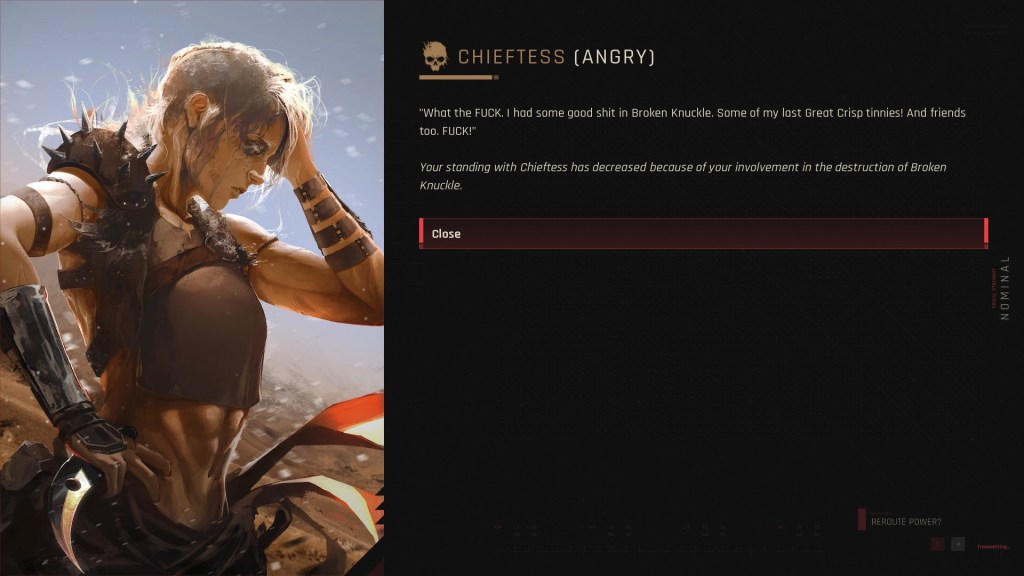
Permanent factions are another feature that stands out to me here. By default, the ZEPHON, Anchorite, and Chieftess are on the map every game. These factions are not playable, but have the presence of a full-fledged rival as opposed to a free city or troublesome element in similar titles. ZEPHON is the world-spanning AI enforcing its will with its effective, if not particularly aesthetic, tech-based creations representing the Cyber affinity. The Anchorite is the Voice-aligned leader of the surviving remnants of the Acrin alien invaders with a far more harmony-leaning ideology than those who came before him. Finally, the Chieftess is the leader of the Human wastelanders that feel heavily inspired by settings like Mad Max. These can all be eliminated, befriended, and traded with like any other faction.
The Verdict
ZEPHON is a very strong entry into the 4X genre. It is a clear improvement over Warhammer 40,000: Gladius even if the loss of the 40K setting may be a blow to its more passionate fans. However, the ZEPHON setting softens it substantially as it combines well-worn and beloved tropes with new ideas. I particularly enjoyed the dark atmosphere that was crafted for it, including the horror-inspired unit roster that was prevalent across the factions.
Mechanically, many of ZEPHON’s features are familiar, though together they create a whole that feels different and has a soul of its own. City management isn’t particularly exciting, but that isn’t out of the ordinary or game-breaking for the genre. Combat, at its simplest level, is fairly standard, though the variety of units and their individual capabilities keeps it exciting and offers a number of strategies at any time to overcome your foes. Diplomacy is functional and works well with a military and conquest-focused game. It’s the layering of the setting with its leaders, affinities, and descriptive, lore-immersing text on nearly every element of the game that really kicks it up from good to great. At this point, I’ve played three full single-player games at progressively harder difficulties and two multiplayer runs. Every one of these felt distinct and I wasn’t able to identify any technical issues along the way, even while playing with freshly released DLC.
ZEPHON doesn’t reinvent the 4X genre, but it has an identity all its own. By combining recognizable mechanics with an exceptional setting, interesting factions, and a constant sense of military pressure, it manages to feel unique even when competing with the heavy hitters that surround it. Few of its individual systems are revolutionary, yet the way they work together creates an experience that remained engaging across multiple campaigns and multiplayer sessions. ZEPHON is an easy recommendation for fans of combat-focused strategy games and stands as a worthy successor to the foundation that Proxy Studios established with Gladius.

You might like ZEPHON if:
- You enjoy combat-focused 4X games.
- You like having steady military pressure throughout an entire playthrough.
- You loved Warhammer 40,000: Gladius and don’t mind having those mechanics transferred to an original setting.
- You enjoy dark post-apocalyptic, cyberpunk, and cosmic horror settings.
- You like immersion and lore, worldbuilding, and flavor text are important to you.
You might not like ZEPHON if:
- You prefer peaceful, economy-focused, or diplomatic 4X experiences.
- You want deep city-building and empire management systems that could stand entirely on their own.
- You are looking for a game that radically reinvents the 4X genre.
- You prefer traditional and/or familiar science-fiction settings.
- You want to be able to move toward multiple victory paths, not just conquest.