(no. 6: Feudums)
eXplorminate note:
This is an article series dedicated to the smaller developers, some of whom may not have managed to get onto the SteamFest. While we at eXplorminate do like the bigger games in the genre (Eo, Old World, Age of Wonders etc) I thought this was a great chance to highlight visibility for the smaller developers. I think the best ideas often come from smaller developers, who are more willing to bend the rules, challenge conventions and take risks.
So far in the not the SteamFest series, we have had a game with no enemy but the world itself, a game that looks like modern art, a re-imagining of Warcraft, a space 4x and a sometimes brilliant, sometimes frustrating brilliant fusion of card builder and 4X. What more weirdness could you possibly have? Did someone just whisper…multiplayer grand strategy persistent game? A what now? Has someone basically created Crusader Kings but online, where every player is a real Human being, but you aren’t limited to Europe…I mean…how does that even work? Without further ado, we at eXplorminate are happy to present the technically impressive and very interesting Feudums, which has been generating a tonne of interest in the Discord.
Game: Feudums
Website: Feudums | Grand Strategy Meets MMO
Developer: Kalamona Studios (aka Mat on the Discord!)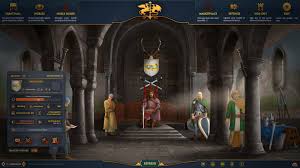

Game Description:
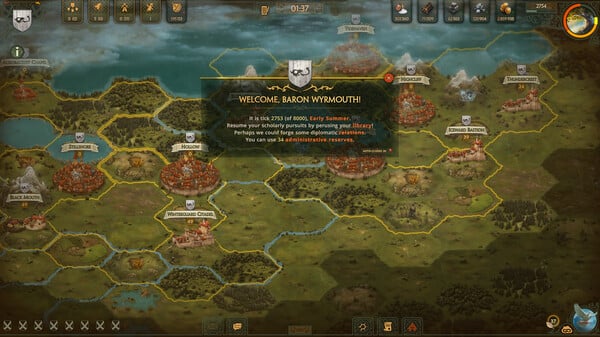
Feudums is a multiplayer grand strategy game where you lead a noble house across generations — navigating the ever-shifting tides of a living, feudal world shaped by player-driven politics and war. Form a feudal society with friends or complete strangers. Build a kingdom, bend the knee, or play both sides. Every choice leaves a mark.
Noble houses persist across game worlds, carrying their legacy — bonds, triumphs, merits and betrayals — into new stories and fresh challenges. Designed from the ground up for persistent, community-driven multiplayer, Feudums is about the long game. Every story is shaped by players — and the houses will all watch, act, and remember.
Designed for players who enjoy deep strategic gameplay and meaningful social dynamics — like diplomacy, intrigue, and emergent alliances — Feudums’ end goal is to avoid the usual grind and micromanagement.
Each persistent game world can support thousands of players and evolves through their choices. Feudums doesn’t tell a story — it gives players the tools to write their own, in a world that remembers every chapters. Thanks to the vassalage feature, players can also join or leave ongoing games seamlessly without disrupting game balance or integrity.
Committed to fair-to-play principles with no pay-to-win components, the game ensures a level playing field for all. With modular systems and full modding support, Feudums aims to be both a long-lasting platform and a fresh take on the online strategy genre.
Notable mechanics/ dynamics:
- Persistent, asynchronous tick-based simulation,
- Idler-friendly, time-respecting design,
- Defined session structure with victory conditions,
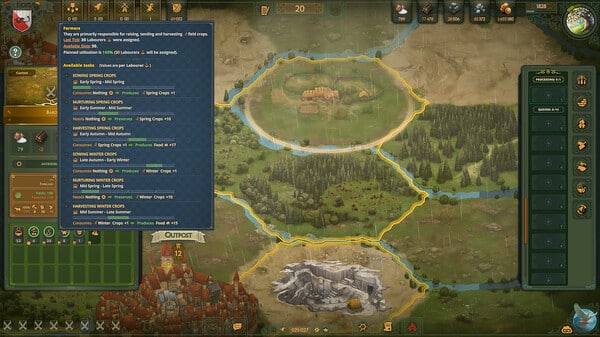
- Seasonal world logic & economy,
- Systemic diplomacy and consequence logic,
- All agreements are non-binding,
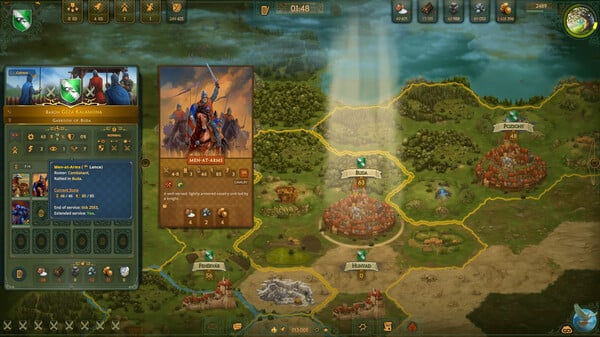
- Strategic warfare with tactical autobattler resolution,
- Interactive planning & intelligence warfare,
- Multi-layered progression (Players develop both transient characters and persistent noble houses with a growing pool of options),
- Rich heraldry as a storyteller of your achievements,
- Emergent narrative from simulation and player interaction.
Further notes:
- in development for 10+ years (long haul & passion project),
- GaaS is used as structural setup, not as a monetization strategy.,
- in fully playable (but not feature complete!), alpha phase,,
- community-first approach: major updates are guided by player feedback and community polls for years, with over 35 playable releases and 370 test worlds to date, ensuring full development transparency and continuous dialogue.
eXplorminate Note:
Mat was asked to elaborate on the “modular” nature of the game, and below is his response:
It means core mechanics like economy, diplomacy, warfare, or seasonal cycles are fully modular / moddable.
Right now, this system is used to test tweaks and setups on the fly based on player feedback. If they have an interesting idea, in many cases I don’t have to change anything in the code but just making changes to the rulesets and templates, then we can test it.
Each world can also be sideloaded, running independently with its own rules and templates.
In the final version, most of it will be opened up to players, allowing them to adjust rules, complexity, and game settings to create persistent worlds or custom mods tailored to different strategic depths and challenges. Some can be simplified and/or idler friendly, some can be very complex. Some can be fast, some can almost be like PBEM.
I can turn off certain main features, simplify others, or add complexity by changing their rulebook representations or modifying optional parts.
Like I could remove all seasonal labourer settings and just add yields to tiles and improvements, remove most units, simplify the improvements and remove the agricultural seasonal settings, to provide a more abstract, boardgame-like experience.
Or I can add more details, more levels, more complexity. The same flexibility applies to the world itself and the calendar, including agricultural dates and rules. I can even remove complete seasons, agricultural features, etc.
Even the code reading the settings and directing a world (Game Director) is fully interfaced and could be replaced by a custom implementation. Per world, so some can use Game Director 1, some others can use Game Director 2.
We have an ecosystem which manages the lifecycle and the actors, like the World Builder (generates the map and determines the starting locations based on a template of settings and rules), a Game Director (calculating the ticks using templates), the player connections (and their view of the game state), etc.
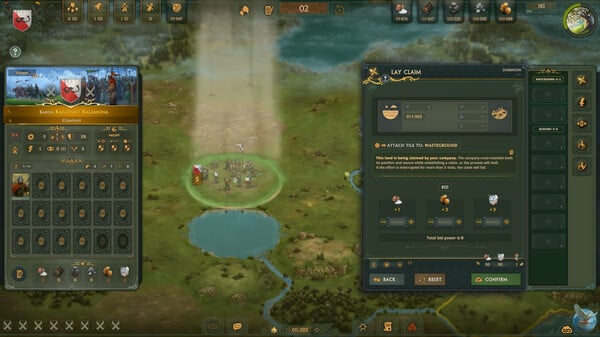
Steam Link, with a demo
Final Thoughts:
Feudums is exactly the sort of game eXplorminate is happy to get behind. It seems less a game than an entire ecosystem. I am especially curious about the nodularity. Would it be possible to make a persistent online fantasy world?
As a reminder, eXplorminate is an independent games journalism and games loving website and community, but we cannot make things happen without your support. Please donate to the Patreon, visit our YouTube, listen to our podcast and join our Discord, if you want to support us.