Welcome to another entry in the Mechanical Wonders series! These articles pluck a single game mechanic from a specific game and talk about why the mechanic is noteworthy. Maybe it does something innovative and awesome that others can learn from. Maybe it does something cool but so subtle you never realized it. Maybe it does something so wonderfully awful that is an example of what not to do! So read on and let us know what you think in the comments.
Those following my ramblings know that I constantly harp on the importance of good victory conditions in 4X games, and further know how quick I am to criticize games that default to the standard, boring, dull, ineffective, and ruinous standard victory conditions.
For those scratching their heads, the “standard victory conditions” (SVCs) are typically the following: (a) exterminate all your opponents; (b) control X-percent of the map; or (c) research the ultimate technology. Fairly often a game might also include (d) win the galactic/global council votes; (e) amass some threshold amount of “wealth”; or (f) have the highest “score” after X-number of turns.

The problems caused by the SVCs are pervasive. Almost all of them play into the underlying snowball syndrome evident in 4X games, aka the rich get richer. Much of 4X games rely on building up your own empire “engine” by reinvesting your production back into the systems that further produce even more outputs. Thus, the SVCs create a positive feedback cycle, where the things you do to move towards the victory condition are simultaneously building your ability to work towards those same conditions even faster.
For example, reaching a technological victory often requires researching countless technologies ahead of it – most of which provide bonuses on their own to your empire through boosting production or research, which lets you in turn research even more technologies. Ugh. Conquering your opponents’ cities or planets is another egregious case, because once you roll over one enemy you are often significantly stronger than any remaining rivals, making it even easier to conquer the next.
Pointing this out may seem like one of those “yeah, obviously!” situations. But all too often players and designs take these for granted as part of the DNA of 4X games. At the same time, they complain about a boring mid-game and mind-numbing late game. Once you start down the snowball path, the game has lost what makes it interesting and meaningful. We go to great lengths to “add more stuff” to the game design to spice up these moments, but rarely address the core issue.

As a consequence of all of the above, I am absolutely convinced that this snowball issue is tied into the SVCs and the incentive structures they create for players. They are ultimately self-defeating. Developers need to put more design thought into creating victory conditions that aren’t tied to the snowball syndrome, and players need to get more adept at advocating for and supporting designs that break the mold.
The good news is that there are plenty of examples where developers have broken the mold and been successful. What unites these alternative victory conditions is this: what you do to invest in working towards the alternative goals are orthogonal (i.e. completely separate) from the things you would otherwise be doing to grow your empire. Instead of feeding into a positive feedback cycle, they are a sink for your resources. Taking a step towards a goal means choosing to specifically not invest in your empire. This choice, in turn, creates a tapestry of strategic decisions that can make the mid and late-game vastly more interesting.
This has been an incredibly long introduction into this week’s Mechanical Wonder – the “Seals Victory” system employed by Age of Wonders III (AoW3). Incidentally, it is one of the features (among many others) that I think makes AoW3 one of the more clever and interesting 4X games I’ve played in a long time.
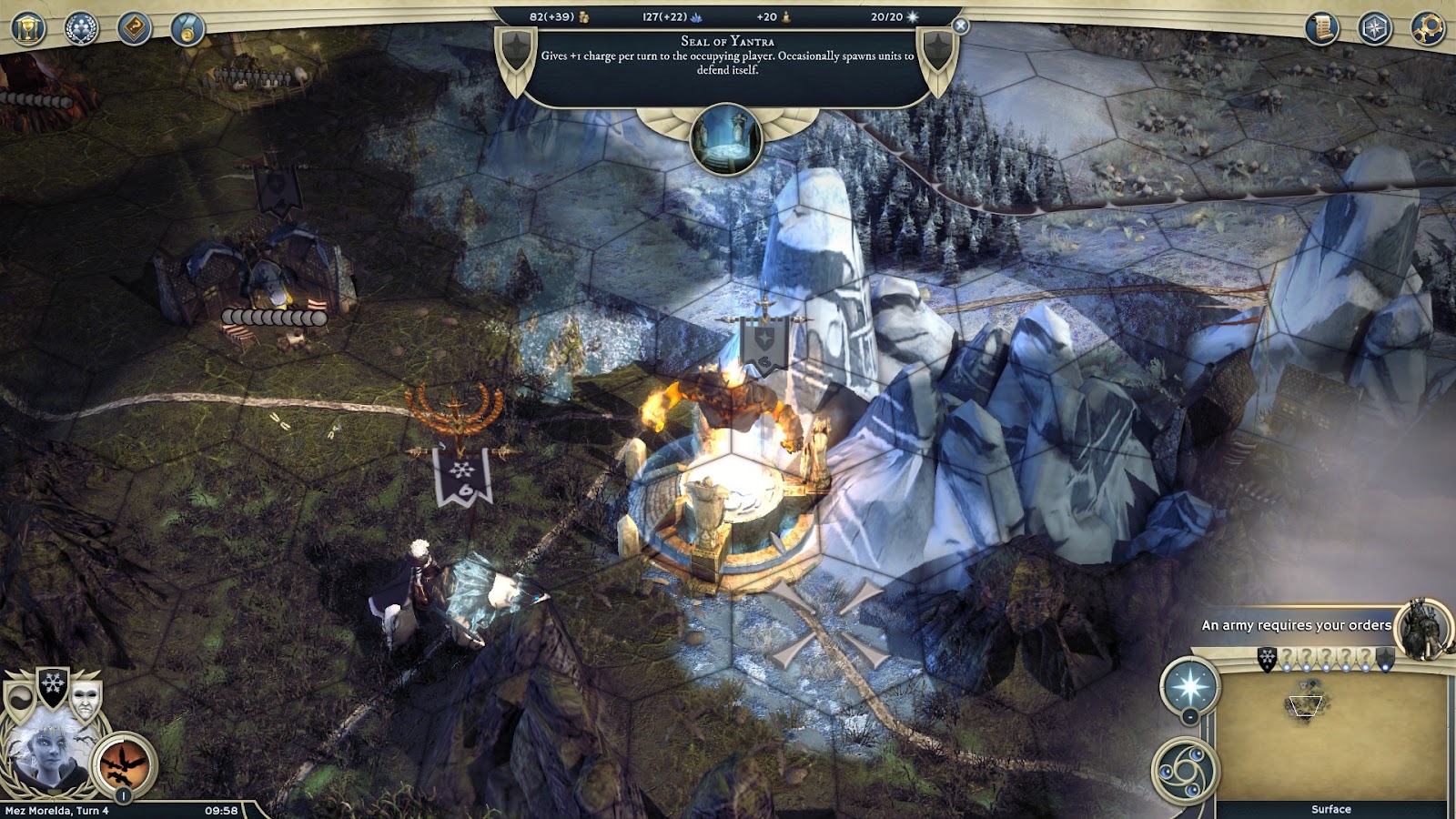
What is the seals victory system? The system essentially turns the conventional 4X game into a glorified multi-point king of the hill scenario. When seals are used, a number of magical great seal locations are spawned on the map (usually 2-5 depending on your settings). Game setup also allows you to specify a certain number of seals points, e.g. 20, an empire needs to accrue to be able to unlock them and harvest boundless magical energy and win the game. Each turn an army camps on a seal site they will collect one seal point.
There are few other important nuances to this. First, the seal locations are guarded by a strong stack of enemy units, meaning that to capture a site you invest in a sizeable military force. Any loses you incur in capturing the site aren’t available for use in campaigning against your rivals or otherwise boosting your production through capture. Even more, sites will periodically respawn their guardian army stacks. If you don’t leave a sizable garrison at the site, it’s easy to have your controlling force wiped out – requiring you to re-mobilize a strong army again to take it back.
The above system immediately re-orients the entire gameplay in a way that severely cuts down on the snowball syndrome. Capturing and holding seal locations is a sink for your resources. Yes, it advances you towards winning, but the seals themselves provide no benefit or boost to your empire that would make it easier to hold them in the future. And when the seals spawn new guardian armies, it’s a way of applying attrition to forces, sapping more of your empire resources to replenish loses. It’s edging towards being a negative feedback cycle where the harder you push to control seals, the harder it is to grow and maintain your empire. That’s a really interesting dynamic!
More broadly, the seal system keeps the mid and late game interesting at a strategic warfare level. No longer can you resolve yourself to mindlessly capturing your opponent’s cities, especially when they might control a seal location or two. Going after their cities might give you a leg up in the production race, but if they pull ahead in the seal point race it can be hard to slingshot ahead. If you leave small garrison’s on the seal sites, it might give you more forces to use on an offensive campaign, but it also increases the likeliness of taking attrition losses. At worst, it’s a sitting duck and an easy target for your opponent.
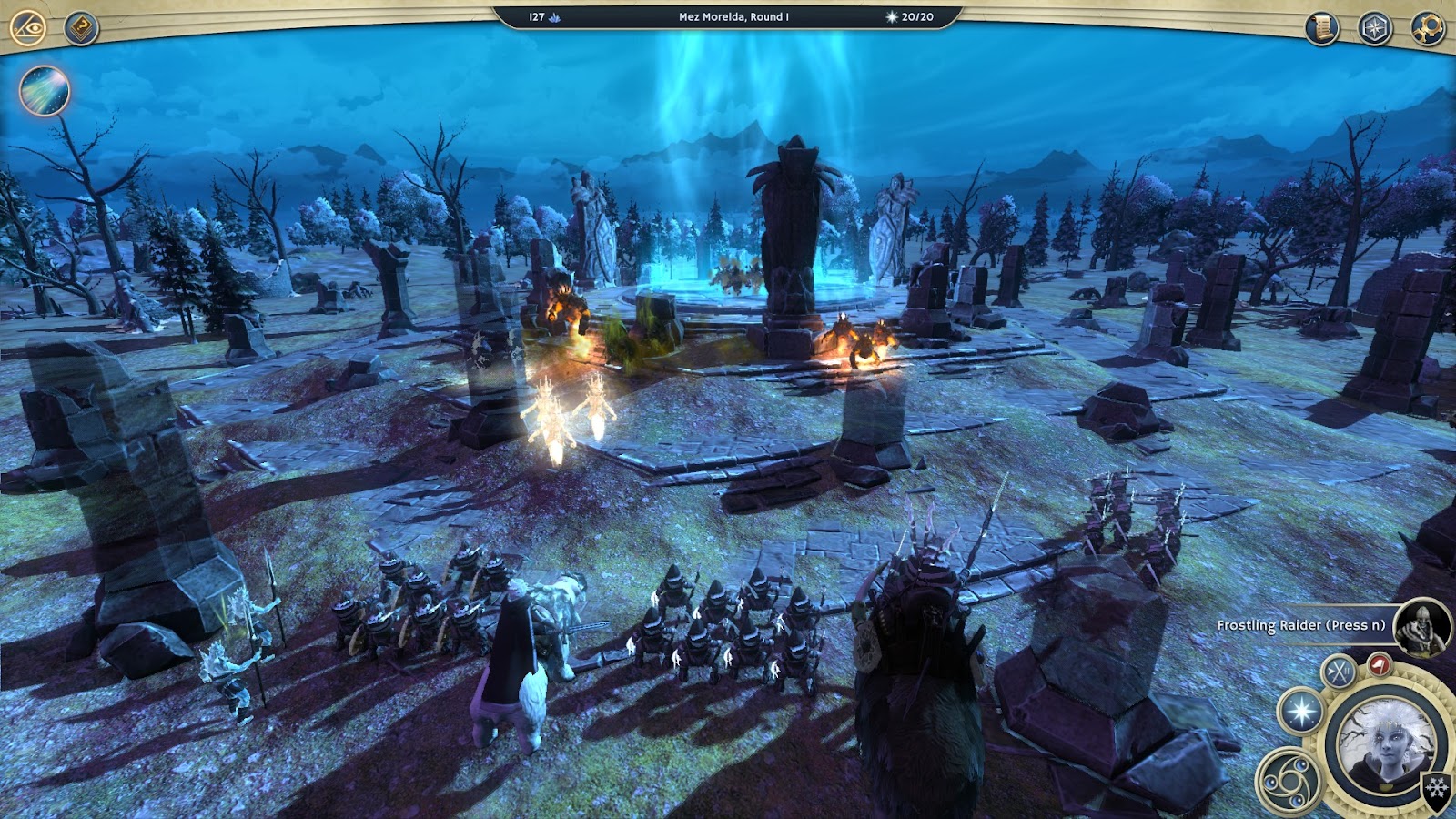
All in all, it creates a great layer to the decision making where it’s no longer apparent how and where you apply your forces. It completely circumvents the end-game doldrums of mindlessly conquering or clicking ‘next turn’ because the battles to control seals are often a tight race right up until the end. The system creates tension and, more importantly, maintains that tension all the way to the victory screen.
My hope is that more developers look at systems like the seal system and look for ways to weave these types of systems – ones which build victory and goals in an orthogonal manner to empire-building itself – into their designs. I’d love to see a 4X game designed around such a system at its conception, instead of being added on after the fact in an expansion or update. And there is tremendous opportunity to weave the narrative and plotlines of 4X games into these systems. Ultimately, games that manage to do this would be able to stand out in the crowd and demonstrate how they are rectifying one of the core problems (i.e. snowballing) of the genre.
So what about you? Have you played AoW3 with the seal system? What did you think? What other games provide similar approaches to victory? Please share and we welcome the discussion!