The Iliad, only passed through a popcorn movie and then rendered into a Total War “Saga.” With the intriguing premise that maybe there was some kernel of truth to all the legends, but is this game a θρίαμβος (triumph) or τραγωδία (tragedy?)
A “saga” is basically a story, such as that of Beowulf, but in this context refers to a bite-sized, condensed, focused form of a Total war game:
“Total War Saga games will be standalone spin-off titles focusing on exciting pivotal moments in history rather than whole historical eras.”
“…key, pivotal points in history which don’t necessarily revolve around a single character, and only lasted a few months or few decades at most. Such moments also tend to be constrained to a tight geographic area as well.”
In the Iliad the wronged Greeks wage war on the Trojans, eventually succeeding through the ruse of the Trojan Horse.
In the movie, the same basic story unfolds, skipping some bits and adding some stuff:
Total War: Troy generously, ahem, borrows some of the imagery from the film, with Agamemnon for example:


Despite these similarities, Hector went entirely off-script, and invaded from half the map away, with suspicious accuracy and timing.
And thus ends my first playthrough.
Thankfully, I’ve been keeping up on my sacrifices to Soteria, and so I escape miraculously unharmed, and Zeus intervenes to let me have another go (The new game button is godly!)
This time, Hector stays very far away, and armed with considerably more wisdom, I pay more attention to what my agents do, specifically my Envoys, who reduce the upkeep of my armies, which is an incredibly powerful ability that the game “help” never explains, despite its tedious loquacity (I had to turn all help messages off because I was getting swamped with useless messages.)
I get my resource engine going and start to have fun, and then notice that Hector must have been training everyone else, because I then get enemy armies marching past 3 or 4 other cities, belonging to people they are at war with, and homing in on an undefended settlement, and then I notice this happens as soon as I move my main stack out of my homeland.
And so ends my second playthrough
And my third…
And so, we come to the first Achilles Heel, or ἁμαρτία (hamartia, meaning weakness, flaw) if you will.
Weaknesses
ἁμαρτία number 1: Cheating AI
I’m starting with this, because it is in my opinion the single worst thing about the game. In my first 3 playthroughs, I was Agamemnon. Why him? Well, the game says this is the “easy” start, so it made sense to start with him. However, I am not convinced this evaluation is correct. You start in a fairly precarious position, and the game help is not helpful (which I’ll discuss that a bit more later). I say precarious, although “confusing” also applies.

If you take out the Corinthians and the Tiryns (the red guys to the south) then you have two provinces, but are then almost completely hemmed in. There really isn’t anywhere convenient to go, because the two people nearest to you are Diomedes (stronger) and Ajax (equal) who are your allies. Further afield, you have the other Greek states, but, unlike for example pretty much all the factions in Total Warhammer, there is not a clear path for you to go and get established. Seeing as this is a turn-based game, the longer this goes on the more you find yourself spinning your wheels, unable to expand and condemned to defense forever.
Now, difficult expansion in and of itself is not a problem, however…
Game 1:
Consolidate start position, crack some skulls in the west, take some cities, get attacked by Hector, who somehow lands just as my armies are in the west, and who conveniently bypasses many other possible targets.
Game 2:
Consolidate again, expand west, keep an eye out for the Trojans, get surprised by the northern Greeks, who again decide to invade conveniently just as there is little defense. Also, again suspiciously conveniently, decide to ignore several enemy cities (as in my allies, their enemies) and come straight for me.
Game 3:
Consolidate area, decide to focus on the northern Greeks, because it looked like my ally Diomedes has the western Greeks nicely sewn up. I then see said western Greeks, down to one single city, magically spawn an entire army of troops more advanced than anything I have (with about 7 cities by this point) and then march past 4 of Diomedes’ cities, which were all undefended, get to my cities, sack one, and then run away just as my main stack arrives.
And this just repeats itself.
It gets almost farcical when you realize that you can force the AI into a weird dance by shuffling just enough of an army (i.e., your B-team) around your hometown, e.g., move out of homeland, let the AI approach, shuffle back, AI gets cold feet, and in the meantime your main army (your A-team) pops up behind them. But this is only possible if you are willing to engage in the diplomacy system, in order to afford the rather high upkeep of having all these soldiers. Evidently, this resource constriction (which I would otherwise applaud) magically doesn’t apply to the AI, who can have huge amounts of food generated from almost no territory.
ἁμαρτία number 2: Confusing and sometimes annoying diplomacy system.
And speaking of resources, now is a good time to bring up another weakness, namely:


No, I do not want to trade 5000 of my food, which I am spending more than I earn due to needing a second army, in return for 500 wood, of which I am producing a surplus, thank you very much.
And no I do not want to trade my hard earned, scarce gold for yet more wood, or stone.
And no I do not want to do this 3 or 4 times every turn.
And no you cannot have my bronze.
Whilst on the topic of diplomacy, the system is more sophisticated than in Total War: Warhammer, not least because you have various resources (more on this later) but also because you can set up trade agreements for a limited amount of time, set up one-time exchanges and also trade regions. That last is extremely useful and something that should go forward into every single Total war game in the future.
However, all of this means there are, in my humble opinion, simply too many buttons in the menu (screenshot), likely to induce either analysis paralysis or a simple φύγε! reaction in the player, at least the first few times you see it.
One last note about the diplomacy, touched upon when mentioning the start position, is that the game begins with various alliances set up, a quite complicated web of agreements and non-aggression pacts etc, and it is quite the cognitive overload to keep track of who is allied to who, and who isn’t (and therefore fair game for my warring.)
The map sometimes looks more like an icon soup than a map. Your mileage may vary, and to be fair I did eventually get used to it.

There is an upside to this though, namely, it is much harder to game the AI into unfavorable diplomacy.
ἁμαρτία number 3:

I hope you like this, because you will be seeing it quite a bit.
It wasn‘t fun the first time, and definitely not the 15th time… and to be fair, this is fairly minor. However, unlike my other minor annoyances, such as ridiculous projectiles trails or very unhelpful “help” messages, these cannot be skipped.
That leads me nicely onto talking about the battles themselves, which are the first of the neutral or ακαθάριστος points.
Now, considering that the battles are the centerpiece of a Total War game, it is perhaps a bit sad that I consider them, in this iteration, merely serviceable. There aren’t many horrendous things happening. The worst part about the battles is CA still insists on named characters being superheroes, which is also reflected in the strategic map where it seems none of your heroes actually die but is merely incapacitated for a few turns. It makes a certain kind of sense, considering this is supposed to be a myth in game form, but it does detract from everything for me. At least it is not as bad as in Total War: Three Kingdoms. In battles, the lower-level units that you will use for a long time tend to break a bit too quickly. The idea is that it reflects how unit cohesion was (and still is by the way) especially important, and how in ancient battles, the actual casualty rate in any one battle was quite low in absolute numbers (but high relative to the population,) and how most of the casualties came when people started to run away. (link to ACOUP)
In that sense, it is more realistic, but coming to this from other Total War games is a bit jarring, because here you have to be actively prepared for your units to rout, then reform later, so you need to plan your battlefield formations accordingly.
It leads to a weird sense of messy, scrappy battles, which, again, may or may not be realistic, but certainly takes some getting used to.
At first, I did not like it, but the system slowly grew on me, and it makes those higher morale units worth their weight in… err… bronze?
The system can be gamed somewhat because morale losses trigger on being flanked or attacked to the rear, even if the flanking unit is, realistically, not a threat. You can do it with your superhero for example.
Also, as is now standard in Total War games, your units seemingly cannot push other units away, which is something that was in Rome: Total War, and which was awesome (a phalanx could be used to dislodge an enemy unit.)
Second ακαθάριστος: the UI.
It could be that I am just used to how things work in Total War games, but I found the UI here largely quite good, certainly fit for purpose, and the things I did not like about it are really design choices, not faults as such. For example, the upgrade paths for your agents and characters consists of a ladder of binary choices, and I much prefer the Total War: Warhammer implementation, where you had 3 or 4 distinct upgrade paths, that went on for a while.


I am aware this is very much a matter of taste!
There is one more ακαθάριστος worth mentioning, which is an irritation in every single Total War game, and in some others besides. When my turn starts, I am deluged by a bunch of messages which have to be clicked away in order for me to get to the thing I actually want to do. And most of those messages aren’t useful. There is an option, buried deep somewhere, that lets you control this though.

Anyway, enough doom and gloom, let’s talk about the strengths, or ρώμη.
Number 1: The graphics
In my opinion, they really nailed the theme. From the moment you boot the game, you know what time period, and what mythos, you are dealing with.


Possibly my favourite thing is the skybox, have a look:

Little touches like this can easily pass you by, but I think it is a major plus point, and really helps evoke that feeling of living (or gaming I suppose?) the period.
But it is not just visual either. They use quotes to emphasize what is going on, and tie things together.

I especially like that they don’t try to sanitize the quotes too much, because I was a bit worried they would gloss over certain things, like homosexual attitudes of the of the time.
Moving away from the theme, ρώμη different resources, forcing scarcity at least in early game (i.e. food, bronze etc)
Some people would say this over complicates things, but in my view, it is a delicious wrinkle in the decision making. It feels a bit retrograde to return to Total War: Warhammer II after this, with just one resource, i.e. gold (and yes I am aware that there are “strategic resources” in that game, such as dyes or furs, that unlock things, but that’s not quite the same thing.) Having some units require bronze to recruit, and sometimes as upkeep (and bear in mind, in all my games bronze was hardly plentiful) acts as a highly effective, and in my humble opinion, thematic limiter on accessing higher level troops. Again, your mileage may vary here, because it is much harder to assemble something approaching a stack of doom.

Scarcity breeds creativity, a fact sometimes lost among those who always want more MORE!
Another ρώμη, which I think many people will gloss over, but which I think it is one of the cleverer things in the game, is the interesting take on mythology e.g. the “Cyclops” or “sirens” (Humans obviously) as your agents or units:

Closely linked to this, the implementation of religion is quite interesting.

I do imagine however, that over a very long campaign, keeping the gods happy would become either necessary busywork, or largely irrelevant. In my games however, the extra growth afforded by keeping Aphrodite happy was particularly useful.
Even if not particularly realistic, or accurate, both systems fit in the game quite nicely, and make sense, within the game context.
On a more technical note, the in game encyclopedia actually works, and is fast.

In fact, this may be the single best in game encyclopedia CA has put out. Again, this is something where your mileage may vary quite widely. I personally really appreciate having rules and explanations accessible and consistent, which is no doubt because I play so many board games.
As another pώμη it is important, I think, to note, that my experience was mostly with Agamemnon. I the interest of research, I played several factions, and it is worth pointing out that they have enough to make them feel quite distinctive, apart from simply having different units, which they do. But there are only so many variations on man/sword/club//shield/pointy stick to throw/pointy stick to stab/something to make gyros with, so I appreciate mechanical differences.
Last pώμη:
Loading times are considerably faster than in Warhammer. I am on a mid range computer, so this makes a huge difference to me.
As we approach our έξοδος (exodus,) my final thoughts:
Compared to the bombastic madness of Total Warhammer, or the massive scale of Rome etc., or the sheer density of Three Kingdoms, Troy is:
- succinct,
- condensed,
- refined,
- distilled,
- inventive,
- pithy,
- occasionally divine, and, appropriate to the subject matter, laconic.

Troy can also be:
- scattered
- unfocused
- cheating
- borked (I promise, it isn’t greek),
- and, also appropriate to the subject matter, Sisyphean.
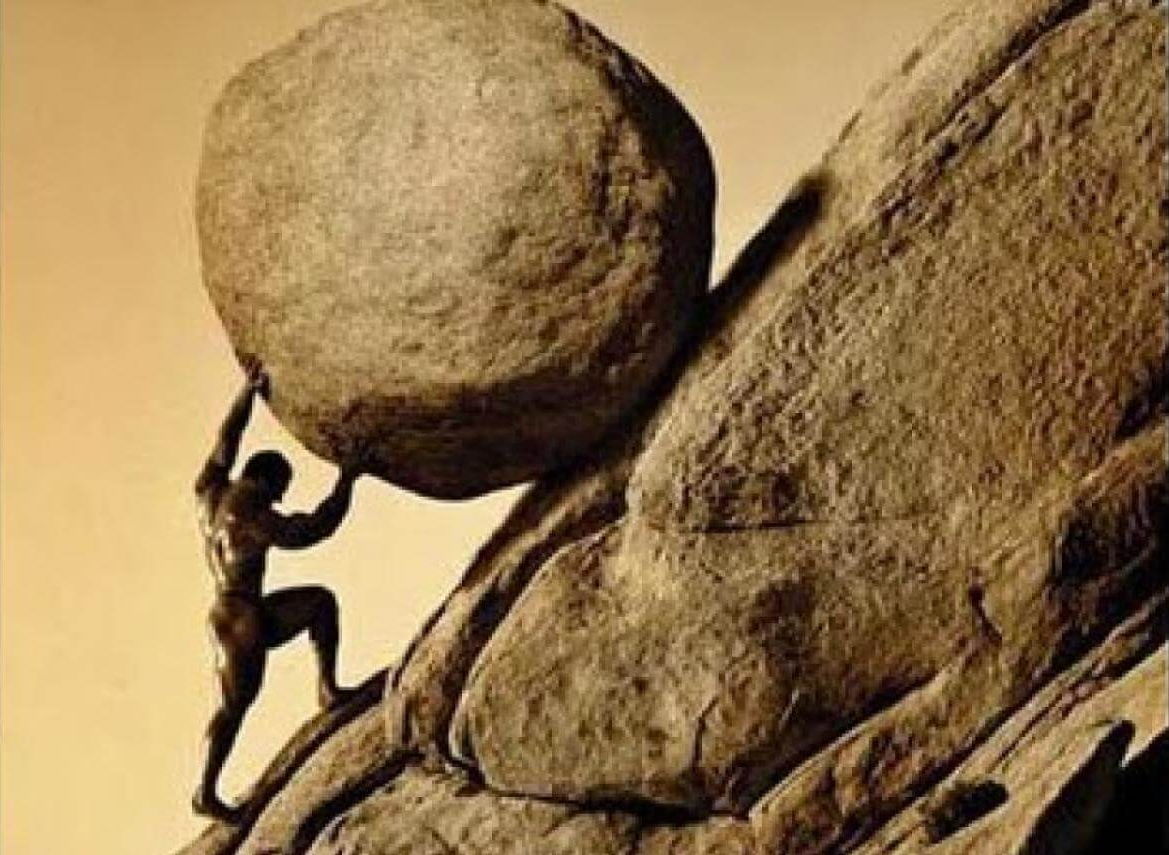
The real question is: will I be playing this again? And the answer is YES. But first, there are some grudges to settle.